Ska
Ska Six Piece Stage Plot Template for Horn Band Shows
A ska six piece stage plot template with guitar, bass, drums, keys and a two horn section, built two-tone style around a singing guitarist for horn band gigs.
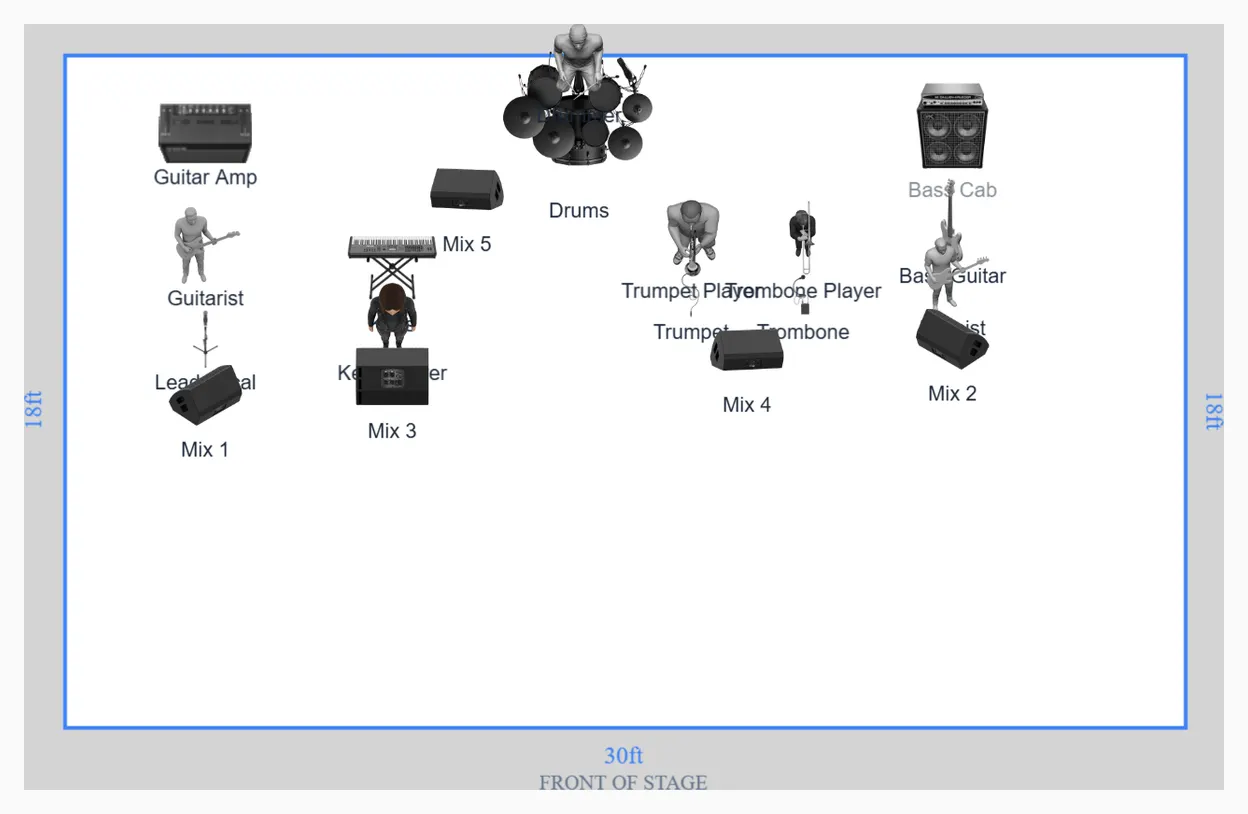
One horn on a cable, one on RF
Most two horn plots put both players on the same kind of microphone. This one does not, and the split is the most useful thing on the page. The trumpet at x18 carries a wired clip on horn mic. The trombone three feet away at x21 carries a wireless clip on mic. That is a deliberate choice, not an oversight, and it comes down to how the two instruments move.
A trumpet player standing at a mark is fine on a cable. The bell points forward, the horn barely travels, and an XLR run to the stage right subsnake costs nothing and never dies. A trombone is a different animal. The slide sweeps three feet of air in front of the player, ska trombonists tend to work the front of the stage, and a cable taped along that path is a cable somebody stands on. So the trombone gets a beltpack.
The price is worth naming out loud. That beltpack is the only radio channel on this entire stage, because the lead vocal here is a wired SM58 on a tripod boom, not a handheld transmitter. One RF channel means coordination is trivial, and it also means there is exactly one battery on stage that can end a horn line mid set. Fresh cells every show, and a spare pack in the case. If you are choosing capsules for either horn, the live mic selection guide covers what changes between a clip on and a stand mic on a bell.
The singer is five feet from the stage left edge
The guitarist sings lead, which is what keeps this band at six pieces. It also puts the lead vocal at x5, not at centre. The Vox style combo sits directly behind that position at the upstage line, the vocal mic sits at y8, and the vocalist's wedge sits at y9.5 in front of it.
Everybody downstream of the plot needs to know this. A lighting designer who assumes the singer is at centre will hang the key light on an empty patch of deck. A house engineer who assumes centre will point the first wedge at nobody. It is one sentence in the advance and it saves twenty minutes of focus notes.
The amp behind the singer is the other consequence. A guitar cab firing straight into the back of an open vocal mic is the classic feedback path on plots like this. Get the combo off the floor and tilted, or turn it across the stage rather than at the singer's back.
The guitar channel is a rhythm instrument
Ska guitar is an upstroke on the offbeat at 160 to 200 beats per minute, played clean and short. That is a percussion part with pitch, and it wants to be treated like one. A mic on the combo rather than a direct feed is the right call, which the template already reflects. Keep the compression light, because heavy compression fills in the gaps between the chops and turns the skank into a wash. If anything, a fast release and a hard high pass around 120 Hz do more for the part than any amount of ratio.
The four piece kit at x15 gives you five to seven channels. Add one bass line, one mic on the guitar combo, one or two for the single keyboard, two horns and one vocal and the whole band lands between 11 and 14 channels. That fits any 16 channel desk in any club in the country.
Five wedges, and the horns share one
There are five mixes on this plot, not six. The trumpet and trombone split a single wedge at x19.5, which is the right default. Two horn players standing three feet apart hear each other acoustically and rarely need themselves in the monitor at all. What they need is the snare and the bass, so build that mix from the rhythm section up and add horn only if somebody asks twice.
The drum wedge is worth a look too. It sits at x12, three feet stage left of the kit and two feet downstage of it, rather than beside the drummer's hi hat. Move it if your drummer wants it closer, but the offset position is what keeps it out of the overheads.
Changeover on a four band club bill
Ska bills are stacked. Fifteen minutes between acts is normal, and a horn section is what eats it. The fix is preparation, not speed. Clip mics stay on the horns in their cases, so they go on the instrument in ten seconds rather than being fished out and threaded. Keys land on a stand that is already assembled. The bassist walks on with a DI already cabled to their pedalboard.
Run through the gear checklist the night before rather than the afternoon of, and if you actually get a line check rather than a soundcheck, the soundcheck guide covers what to prioritise when you have four minutes instead of forty.