Live Sound
How to Run an Efficient Soundcheck Before Your Gig
A working order for band soundcheck, from line check to full mix, with realistic timing so a four-piece club gig or a festival changeover actually finishes.
By Stageplot Pro Editorial Team Updated
Soundcheck is not a rehearsal
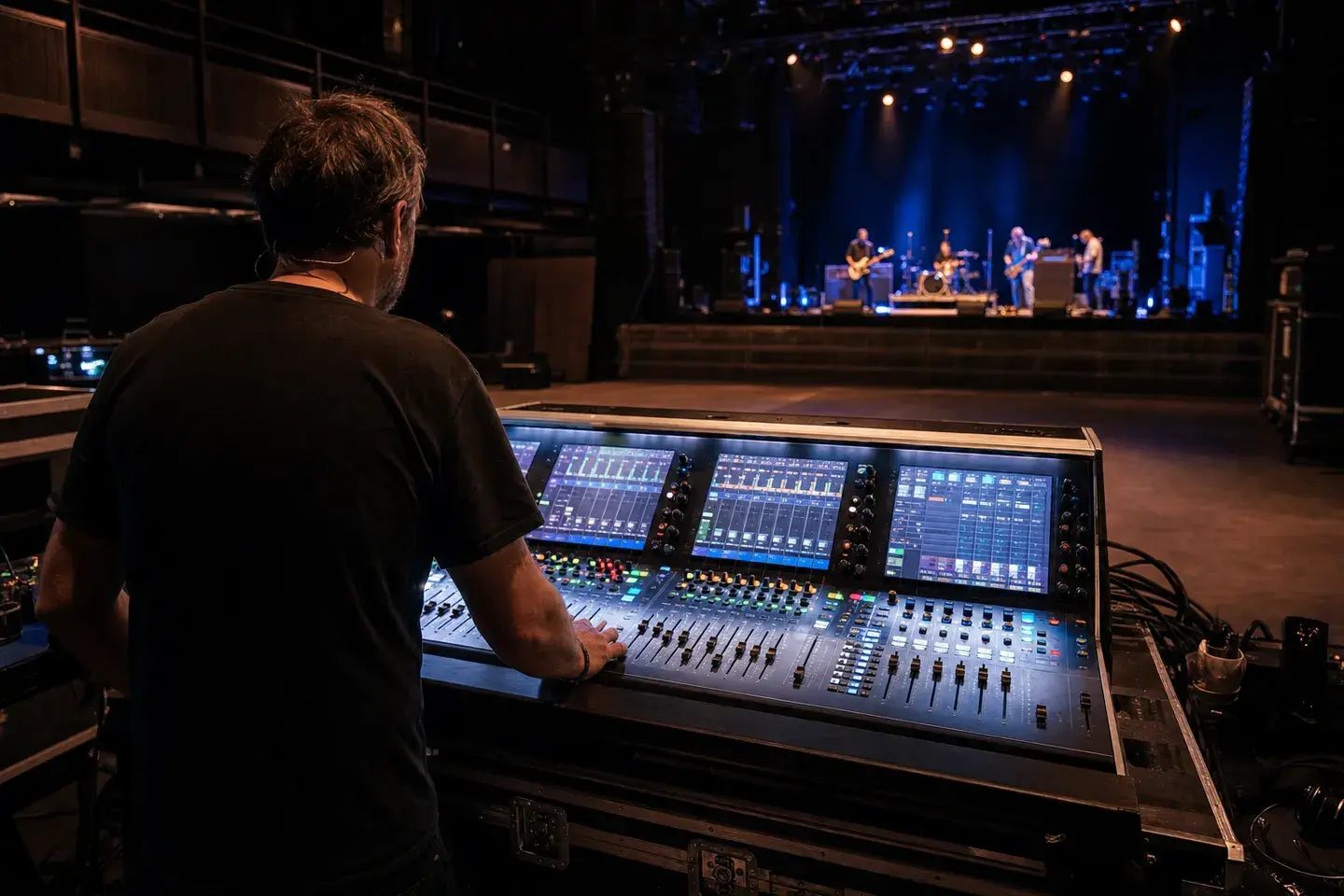
The single biggest time waster at soundcheck is a band that starts playing a full song before the engineer has gain set on every channel. Soundcheck exists to get every input to a usable level and every performer a usable monitor mix. Save the rehearsal for your own space. Walk in ready to play short, repeatable phrases on command, not a verse and chorus of your single.
Line check first, every time
Line check happens before anyone touches a fader for a mix. The engineer goes channel by channel, drums first, then bass, then guitars, then keys, then vocals last, confirming signal is present and roughly gain staged. This is the moment to speak up if a channel is not showing signal, not five minutes later when the band is mid-song and the engineer is chasing a dead mic through the stage box. If you built your plot in the Stageplot Pro editor, your input list gives the engineer the exact channel order to call, which speeds this step up more than almost anything else you can do.
Gain staging, briefly
Every channel needs enough gain to sit above the noise floor without clipping on the loudest hit. This is the engineer's job, not yours, but you can help by playing at your actual show volume during line check, not a quiet warmup version. A drummer who soundchecks at half the volume of the actual set forces the engineer to guess, and that guess is usually wrong by the first song.
Monitors before the full mix
Once line check is done, monitor world usually goes first, one performer at a time. Ask for what you need in specific terms: more kick and less of my own vocal, more lead guitar in my wedge, less overall level. Vague requests like more me waste time because the engineer has to guess what more me means. If your band runs in-ears, confirm mix assignments and any click or track feed before this step starts, not during it.
The full band pass
With monitors roughly set, the band plays together for the first time in the room. This is where the engineer builds the front of house mix and where ringing out wedges for feedback happens if it has not already. A realistic full band pass for a four-piece is one full song plus a couple of targeted passes on any part that exposed a problem, not a start-to-finish run of the set.
Realistic time budgets
A four-piece club band with a straightforward input list should be done in 25 to 30 minutes if the input list was accurate and gear was set up before the clock started. A wedding or corporate band with horns, keys, and multiple vocalists needs 45 minutes to an hour. A festival changeover gives you far less, often 15 to 30 minutes total for load-in, line check, and a monitor pass combined, which is why festival sets need a leaner mic and channel count than your headline show. Our festival stage plots guide goes deeper on planning for that clock.
What to bring so soundcheck goes faster
Show up with your stage plot and input list already built and shared with the engineer ahead of time, not printed in the parking lot. Our tech rider guide and input list guide cover what belongs in that paperwork. A wedding band eight piece template or a worship band seven piece template is a fast starting point if your lineup is larger than a standard four-piece, since more inputs means more room for line check to run long if nobody has seen the plot before you arrive.
When soundcheck runs long
Most delays come from the same handful of causes: a channel that was not patched because the input list did not match what actually showed up, a band that starts playing full songs instead of short phrases during line check, or gear that gets set up during the soundcheck window instead of before it. If you feel the clock slipping, the fastest fix is to stop and ask the engineer directly what they still need from you, rather than continuing to play through a problem neither of you has named out loud. A five second pause to confirm what is left to check almost always saves more time than it costs.
Multi-band nights and shared backline
On a bill with two or three other bands, soundcheck often only happens for the first act, with everyone after that doing a shorter line check during the actual changeover. If you are not first, expect a compressed version of everything in this guide: quick line check, a fast monitor pass, and minimal full band time. This is exactly the scenario where an accurate, pre-shared input list matters most, because there is no time for the engineer to discover your channel count by trial and error between sets. If your band is sharing backline with another act on the bill, confirm who owns which amp and mic before doors, not while the first band is already tearing down.
After soundcheck, before doors
Once soundcheck wraps, resist the urge to keep playing or adjusting your own gear. Settings the engineer dialed in during your check can drift if someone bumps a pedal or changes an amp setting afterward, and there is often no time to recheck before the room fills and the show starts. Treat the end of soundcheck as the point where your gear is locked until you are back on stage for the actual set.
Talk to the engineer like a colleague
The engineer at soundcheck is not an obstacle between you and the stage, they are the person who makes your band sound like your band to the room. Our working with sound engineers guide goes further into how to communicate clearly during this window, but the short version is: be specific, be quick, and trust that a calm soundcheck turns into a calm show.