Gear
How to Mic a Drum Kit for Live Sound Without Overkill
A load-in-tested guide to miking a drum kit for live shows, from a two-mic minimal setup to a full eight-piece rig, plus what actually needs a channel.
By Stageplot Pro Editorial Team Updated
Start from the room, not the mic case
A drum kit at a 200-cap club does not need the same mic count as the same kit at a festival with a 40-foot PA hang. The number one mistake bands make is bringing a full eight-mic drum plan to a room where the kit is already loud enough to fill the space acoustically. Decide your mic count from the room size and the PA, then build the stage plot around that, not the other way around.
The minimal kit: two mics
Kick in and an overhead, or kick in and a single condenser over the kit, is enough for most small rooms. It gives the engineer control over kick punch without killing the natural balance the drummer already dialed in by hitting things at the right volume relative to each other. This is the setup most acoustic and folk-leaning bands should default to, see our folk trio template for how that lands on a plot.
The standard club kit: five to seven mics
Kick in, snare top, and an overhead pair covers most rock and pop gigs cleanly. Add snare bottom if your drummer plays with a lot of ghost notes and rim work that gets lost from the top mic alone. Add a rack tom and floor tom mic if the kit has real low-end fills that need to cut through a loud guitar band. A Shure Beta 52A or an AKG D112 in the kick, an SM57 on snare top, and a matched overhead pair (SM81s or a cheaper KSM137 pair) covers the vast majority of club and theater gigs. Our four-piece rock band and metal five piece templates both show this mic count laid out on the plot.
The full kit: eight-plus mics
Hi-hat, both toms individually, snare top and bottom, kick in and out, and a wide overhead pair is the festival-standard full mic. This only pays off when the PA and the room can resolve that much detail, and when the engineer has the channel count and the time in soundcheck to actually use it. Do not ask for a full mic on a 20 minute festival changeover, you will not get a usable mix out of eight new channels in that time. Bring the minimal plan for fast changeovers and save the full mic for your own headline show.
Kick drum specifics
Kick mic placement makes a bigger difference than mic model. Inside the shell near the beater gets attack and click. Pulled back a few inches gets more low end and less click. If the kick has a port hole, that is usually where the mic goes, angled slightly off the direct beater line to avoid the loudest transient blowing out the capsule. Tell your engineer if your drummer plays a double kick pedal setup, it changes how tight the gate or compressor needs to be set.
Snare, toms, and bleed
Snare top goes an inch or two above the rim, angled away from the hi-hat to reduce bleed. Snare bottom, if you run it, gets flipped in polarity at the console, every engineer knows this but it is worth confirming out loud during line check. Tom mics clip to the rim and point down at the head, close enough to reject cymbal wash but not so close the drummer's stick hits the mic clip mid-song, which happens more than anyone likes to admit.
Overheads
A spaced pair or an XY pair over the kit captures cymbals and overall kit balance. An XY pair, two capsules nearly touching at an angle, is the forgiving option: with no distance between the capsules there is no timing difference to cause comb filtering, and the image collapses cleanly to mono. A spaced pair sounds wider but demands careful, symmetric placement, each mic the same distance from the snare, or the two arrival times smear the kit with phase cancellation. If you are not sure your house engineer will have time to measure a spaced pair on a tight changeover, XY or a single overhead is the safer call.
Mic clips, stands, and the small stuff that fails first
More drum mic problems come from a loose clip than a bad mic. A rim-mount tom clip that has been over-tightened and stripped will not hold a mic angle through a full set, and a boom stand for the overhead pair that was not weighted properly will slowly droop over an hour of playing. Carry a couple of spare rim clips and check every stand's tension before the band starts, not after the first song when a mic has already drifted off the head. If the venue supplies stands, ask for boom stands specifically for overheads rather than straight stands angled awkwardly over the kit, which is a common workaround when a venue is short on boom stands.
Drum shields and stage volume
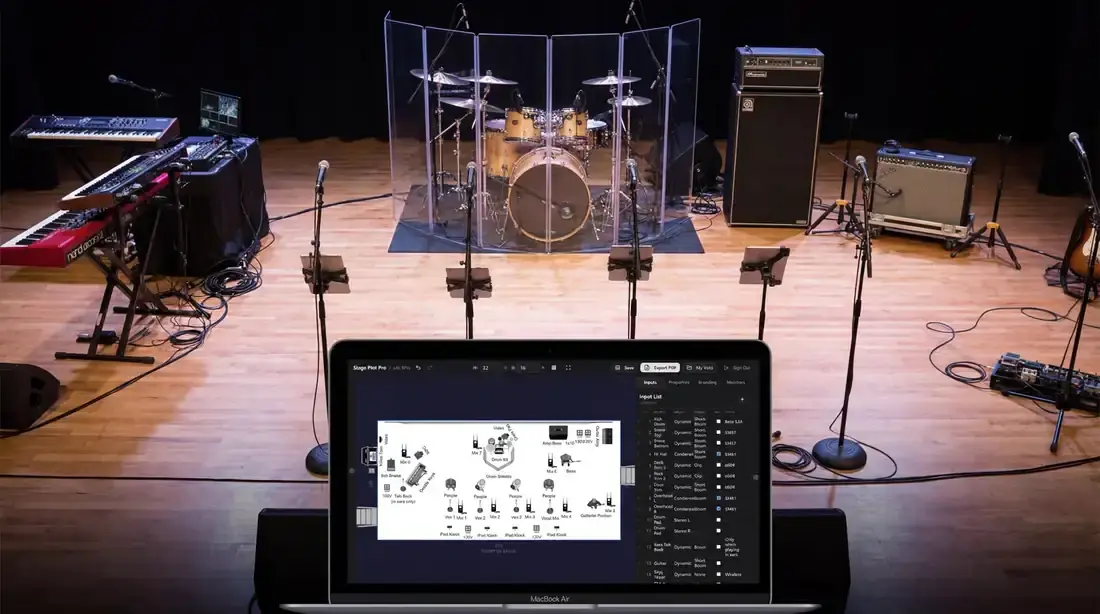
A drum shield, clear plastic panels around three sides of the kit, is common in smaller rooms and churches where acoustic kit volume competes with vocals and quieter instruments. A shield does not replace good miking, it reduces bleed into other channels and gives the engineer more control over how loud the kit reads in the house mix relative to everything else. If your venue asks you to run a shield, it usually also means they expect a fuller mic count rather than a minimal two-mic setup, since the shield is there specifically because the room needs the kit under more control, not less.
Talk to the engineer about your kit before you arrive
Tell the engineer your kit size and your mic count preference in advance, not as a surprise at load in. A drummer running a compact four-piece kit with a minimal mic plan needs almost no setup time. A drummer running a double kick, extra toms, and a full eight-mic plan needs the engineer to budget real time for it. Mentioning this in your advance paperwork, the same tech rider that covers your other stage needs, means the engineer is not discovering your actual mic count for the first time while the clock is already running.
What this means for your stage plot and input list
Every drum mic you place on your kit icon in the Stageplot Pro editor becomes its own line in your input list, so a full eight-mic kit shows up as eight channels without you typing a channel list by hand. Keep drum mic counts realistic for the gig type. For festival sets specifically, our festival stage plots guide covers how to plan a mic count that survives a changeover clock, and our mic selection guide covers the vocal and instrument side of the same rig.