Function
Nine Piece Cover Band with Horns Stage Plot Template
A practical nine-piece cover band plot with drums, bass, guitar, keys, two horns, lead vocal, two backing singers, 21 inputs, eight mixes, power and DIs.
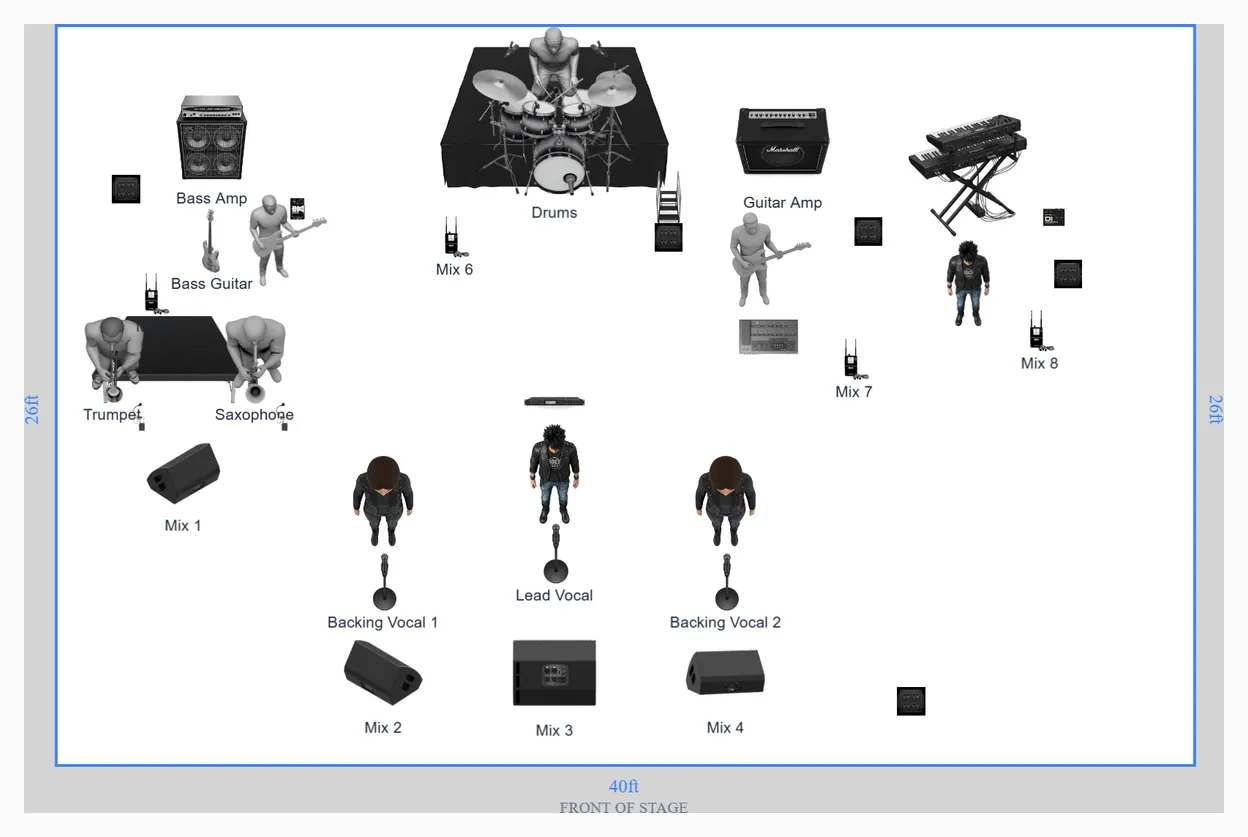
Four players on ears and three singers on wedges
This plot runs both monitor worlds at once, and the split is not a compromise. It is the point. Drums, bass, guitar and keys each have an in ear pack drawn beside them. The lead vocalist and the two backing singers each have a floor wedge at the 22.5 foot line. The horn pair shares a single wedge at stage left.
The reasoning is about where people work. The rhythm section stands still, locks to each other, and benefits from a sealed mix that never changes when the room fills up. The three singers spend the night moving along the downstage edge, working the crowd, and handing the mic to a bride. Ears cut them off from the room they are supposed to be reading, and a singer who cannot hear the audience stops selling the song. Wedges keep them in it.
The cost of that choice is three open sends in front of three live capsules near the front edge. Note the geometry the template already handles: the wireless vocal mics sit at the 18 to 19 foot line and the wedges sit at 22.5 feet, downstage of the singers and firing back at them, so the capsules point away from the boxes. That three and a half foot offset is worth more gain before feedback than any EQ move.
Clip on horn mics change what the horn line can do
The trumpet and sax both wear a wireless clip on mic rather than standing at a fixed stand mic, and the difference is bigger than a channel count.
A clip on gives you a constant distance to the bell, which means a level that does not move when the player leans back for a high note or turns to cue the band. It frees the horn riser of stands, which matters when two people are sharing a small riser at stage left. It lets the section walk downstage for a feature without losing the mic.
What it costs you is room and two more RF channels. A clip on hears the bell and almost nothing else, so the section can sound thin and hard in the house compared to a pair of stand mics three feet back. It also has less gain before feedback than you expect, because the player who walks downstage for a solo is now standing in front of three vocal wedges with a live mic on their horn. Brief the section on that walk. The tradeoffs between capsule types are covered in the live mic selection guide.
Twenty one channels, five power drops, two DI boxes
The input list runs about 21: nine for the miked kit on the riser, bass amp and bass DI, one on the Marshall at stage right, four from the double keyboard rig, two horn clip mics and three vocals. The stagebox rack sits dead centre at the 13 foot line, which puts nothing on this stage more than 20 feet from a return.
The DIs matter more than they look. The keys rig runs a stereo DI at the stage right corner and the bass runs a mono box beside the player. Both need to be drawn where they physically sit, because a DI on the plot is a reminder to the house that they do not need to supply one, and a DI box that shows up late is ten minutes gone. Five quad power drops are marked at bass, drums, guitar, keys and the downstage vocal position. Ask the venue for two separate 15 amp circuits and name which drops are on which.
The drum riser with four steps is time you have to budget
Two risers and a set of four step stairs is 25 to 35 minutes of build with a crew that has done it, and closer to an hour with one that has not. On a corporate date where you get a 60 minute changeover behind a keynote, that is your entire window before a single cable gets pulled.
Two ways out. Build the risers during the previous segment if the room allows it, or plan a flat version of this plot in advance and carry it as a second PDF. The flat version is not just the same plot with the risers deleted. The horn line moves upstage and the drums lose sightlines to the singers, so decide where everyone goes while you are sitting at a desk, not while a production manager is standing over you.
Eight mixes, 21 channels, two risers. Walk the engineer through the ears and wedge split first, because everything else follows from it. The order to work through it live is in the soundcheck guide.