Reggae
Reggae Band Stage Plot Template for Live Roots Shows
A reggae band stage plot template with skank guitar, deep bass, drums and a two tier keys rig behind the singer, built around the bass and the one drop groove.
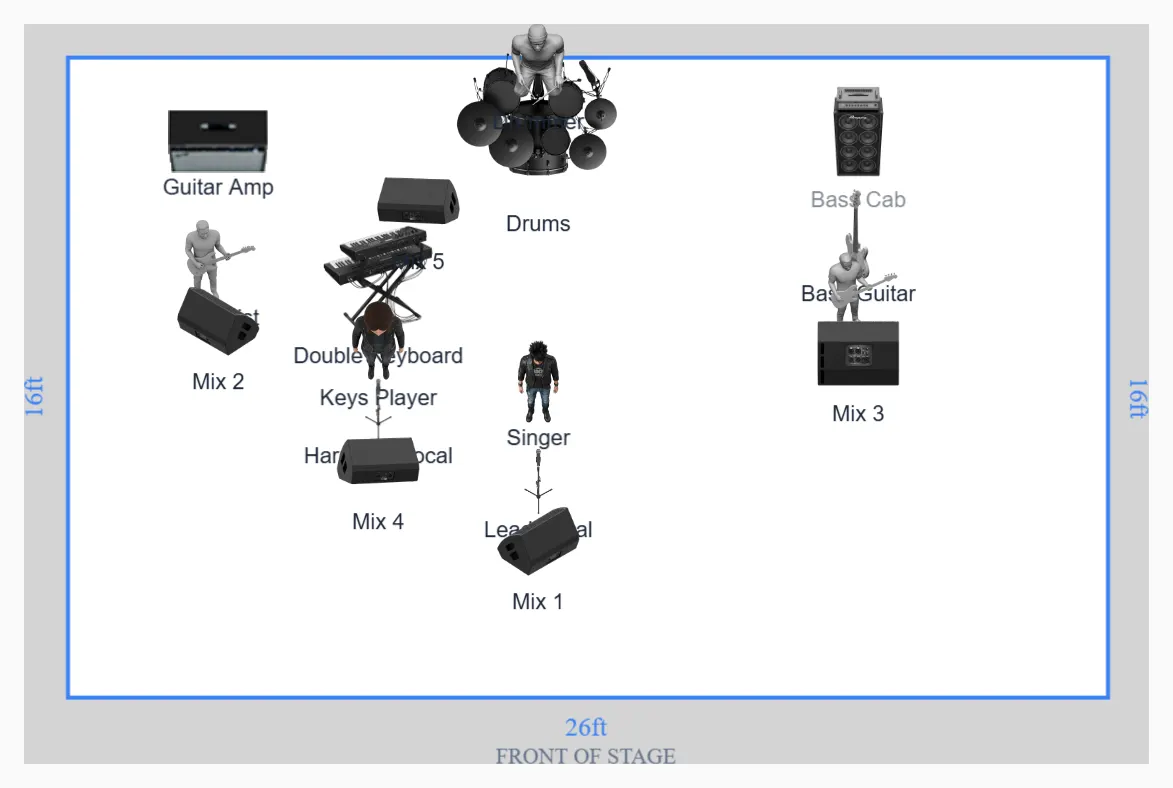
The bass is the lead instrument, and the plot has to say so
In most bands the bass supports the song. In reggae it is the song. The melodic content that a rock engineer would expect from a guitar is coming out of the bass guitar at x21, and if that channel gets treated as a bed under everything else, the whole show sounds wrong in a way the audience will feel without being able to name.
Put that in writing on the advance. One sentence, something like "bass carries the melody, please mix it forward", will change how the first ten minutes of soundcheck goes. Engineers who have not mixed the genre default to a rock balance, and they cannot read your mind from a drawing.
An 8x10 on a 26 foot stage
The 8x10 bass cabinet sits at x21 y2.2 with no line running to the console. That is eight ten inch drivers pushing into a room from a 26 by 16 foot stage, and it means the low end the audience hears is a blend of the PA and the backline whether anyone planned it or not.
Two practical consequences. First, ask front of house to walk the room during soundcheck, because in a small venue the cabinet frequently beats the PA where the audience is standing. Second, if your tone is that cabinet, ask for a mic on it as well as the DI. A large diaphragm dynamic on an upper driver, a few inches back and slightly off centre, gives the engineer something to blend when the DI sounds too clean for the material.
The sub content is the part people get wrong. A one drop groove leaves a lot of empty space, and the temptation is to fill it with more low end. Resist. Below about 50 Hz you are mostly moving air and eating amplifier headroom. The weight in a reggae bass line lives between 60 and 120 Hz, and asking for that band to be clear rather than asking for more of everything is what makes the bass sound huge.
Stage volume is a bass decision
The Fender style guitar amp at x5 y2.5 is the quietest thing on the stage and should stay that way. A skank part is a short percussive chop on the upbeat, and it needs clarity and attack, not level. Set that amp so it is audible but not competing, then leave it. Every decibel the guitar takes back is a decibel of headroom the bass loses.
The four piece kit at x13 y2 wants the same restraint. One drop puts weight on the kick and the rim on beat three, which means kick and snare are the channels doing the work and cymbal wash is your enemy. Ask the engineer to keep the overheads conservative and let the kick sit forward. That combination reads on a small PA far better than a big open drum sound.
Two keyboards doing two entirely different jobs
The double keyboard rig at x9 y6 is not a redundant setup. One board is playing the organ bubble, the eighth note pattern that sits between the beats and gives the groove its lift. The other is usually a clav or piano handling the skank alongside the guitar, or pads underneath.
Those are separate voices with separate levels and they should not be summed to one channel to save space. If you have the inputs, give the rig a stereo pair per board. If you do not, at minimum name them as two mono channels on the input list so the engineer knows the bubble can be ridden independently of the chordal part. The bubble sits in the same register as the guitar skank, so those two need to be balanced against each other deliberately rather than by accident.
The bass wedge is the strange mix on this plot
Five wedges here, one each for lead vocal, guitar, bass, keys and drums. Four of them are ordinary. The bass wedge at x21 y7.8 is not, because the bassist is standing in front of an 8x10 and does not need any bass in it at all. What they need is drums, specifically kick and rim, and the keys bubble. That is the entire mix. Write it down before you arrive using a monitor mix request template rather than discovering it at line check.
The drum wedge at x10 y4 sits well inside the stage rather than at the kit, which is common on a small deck. It should carry bass and vocal, nothing else.
Two vocals on booms, lead at x13 y11 and harmony at x9 y9.2, with the harmony mic right beside the keys rig. That proximity is worth flagging on the plot, because it is the first thing to ring when the keys wedge comes up. Aiming the wedge off the back of the capsule solves it, and a page of similar traps is collected in the common stage plot mistakes guide. Before you send anything, run your rig against the band gear checklist so the DI and cabinet questions are already answered.