Planning
Common Stage Plot Mistakes That Slow Down a Load In
The recurring stage plot mistakes that cost bands time at load in, from missing orientation to input counts that do not match the actual band on stage.
By Stageplot Pro Editorial Team Updated
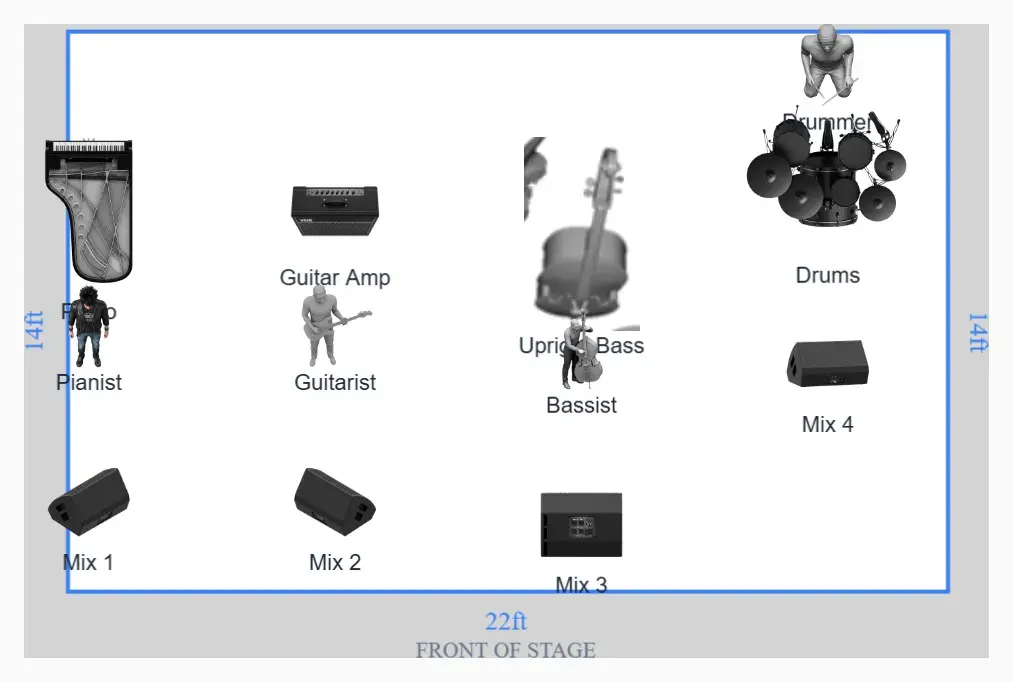
A stage plot only works if someone can read it fast
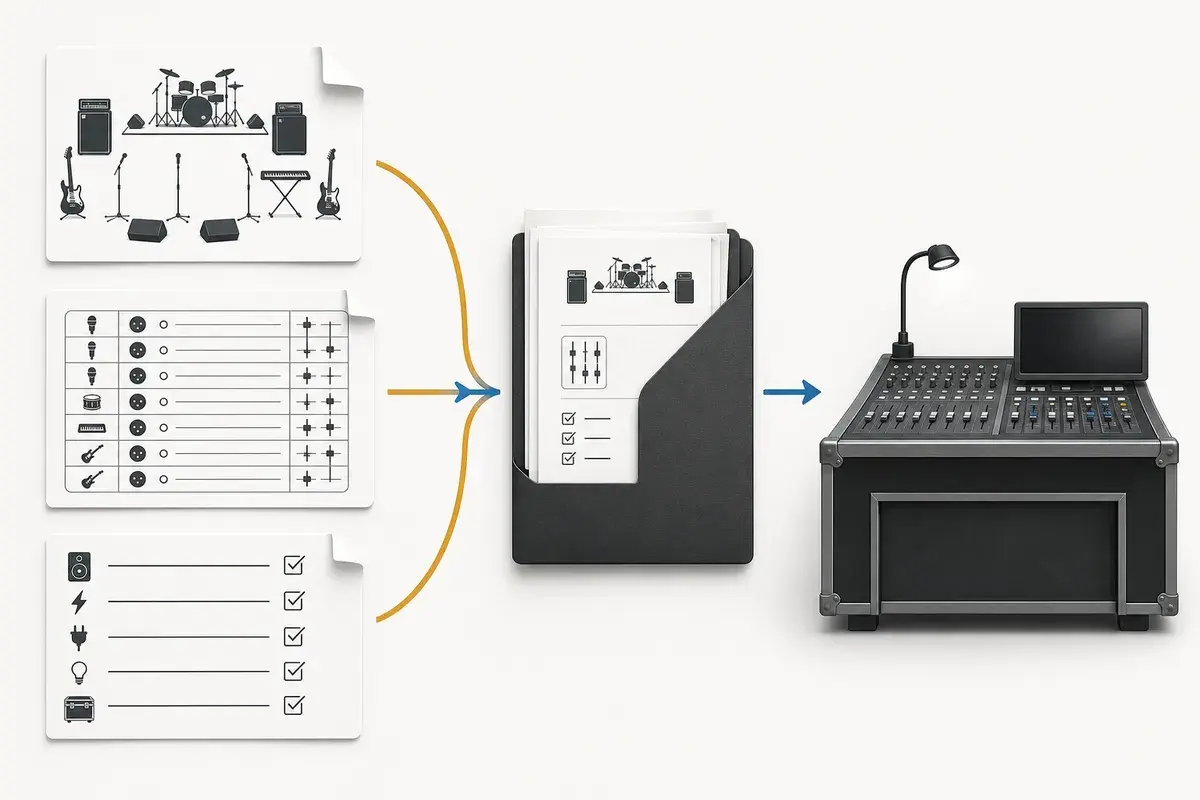
An engineer or stage manager reads your plot once, quickly, before you arrive and once more while patching the stage box. Every mistake on this list costs real minutes during that second read, which is exactly when you do not have minutes to spare.
No clear orientation
If it is not obvious which edge of the plot is downstage, front of house side, the engineer has to guess or ask, and guessing wrong means gear gets placed backward. Always mark which side faces the crowd and which side is upstage. A plot without this is not really finished yet.
Input count that does not match reality
This is the most common mistake and the most costly. A plot showing ten inputs when the band actually needs twelve because someone added a keys player since the plot was last updated means the engineer runs out of patched channels mid-line-check and has to scramble. Update your plot every time your lineup or gear changes, do not keep reusing a plot from a different lineup because it is close enough.
Misunderstanding what actually creates a channel
Bands sometimes list every pedal and DI box on the plot as if each one needs its own input. It does not work that way. The instrument creates the channel, the DI box or pedal is just the path the signal takes to get there. A bass through a DI is one channel, not two, no matter how many pedals sit between the bass and the DI. Get this wrong on paper and your input list overstates your channel count, which confuses the engineer before you have even loaded in. Our DI boxes explained guide covers this in more detail if you want the full picture.
Mislabeled or unnumbered channels
Every mic and DI on your plot should have a clear label that matches your input list, in the same order the engineer will patch them. A plot with generic labels like mic 1, mic 2 with no indication of what instrument each one belongs to forces the engineer to ask you channel by channel during line check, which is exactly the slow, avoidable conversation a good plot is supposed to prevent.
Forgetting monitor count
Every performer who needs their own monitor mix should show up on the plot as a labeled wedge or IEM position, not lumped into a generic monitors note. If your drummer and your lead vocalist share one monitor mix, say so. If they do not, say that too. Our monitor mix guide covers how monitor count actually gets built into a workable mix at the console.
Illegible scans and outdated file formats
A stage plot photographed at an angle on a phone, slightly blurry, with handwritten labels, is still common and still a problem. A clean digital plot exported as a proper PDF reads instantly on a phone or a printout, handwritten notes on a napkin do not. Build your plot once in the Stageplot Pro editor and export it clean every time, instead of re-photographing the same paper copy for every gig.
Reusing someone else's plot without adapting it
Borrowing a bandmate's old plot from a different project, or copying a generic template without changing anything, is faster than starting from scratch, but only if you actually adapt it to your real lineup afterward. A plot that still lists a second guitarist your band no longer has, or is missing a keys player you added last month, is worse than no plot at all because it actively misleads the engineer instead of leaving a gap they know to ask about. Start from a template close to your setup, then check every position against your actual current band before you send it anywhere.
Ignoring the stage dimensions you were given
A plot that assumes more room than you actually have causes real problems once gear shows up and does not fit. If a venue tells you their stage is 16 feet by 12 feet, a plot drawn for a 24 foot stage will not translate, positions will overlap, and someone finds this out during load in instead of before it. Always check the actual footprint before finalizing placements, our stage dimensions guide covers how to get real measurements instead of guessing from memory of a different room.
Sending the plot too late to be useful
A stage plot emailed the morning of the show, or handed over at load in, defeats most of the purpose of having one. The value of a stage plot is that the engineer can prepare before you arrive, patch what they can in advance, and think through anything unusual ahead of a live clock. Send your plot as soon as your lineup and gear are settled for the gig, ideally days ahead for a club date and as early as the festival's advance deadline allows for a festival slot.
What a clean plot actually looks like
Compare a cluttered plot against a clean one built from a proven layout. Our four-piece rock band and jazz quartet templates both show clearly labeled positions, sensible input numbering, and obvious orientation, the baseline every plot should meet before it goes out to a venue. Pair a clean plot with a matching input list, our input list guide and how to make a stage plot guide cover both from the ground up, and read our working with sound engineers guide for what happens once that clean plot reaches the person patching your show.
| Check | What must match |
|---|---|
| Lineup | Every person and instrument arriving at the show |
| Inputs | Every microphone and DI on both plot and input list |
| Monitors | Mix number, type, and performer position |
| Space | Actual venue dimensions, risers, and clearances |
| Version | Date, venue, contact, and current revision |