Blues
Blues Trio Stage Plot Template for Guitar, Bass and Drums
A blues trio stage plot template with guitar, bass and drums, a singing guitarist and a rack harmonica mic, built for a warm, dynamic small club blues show.
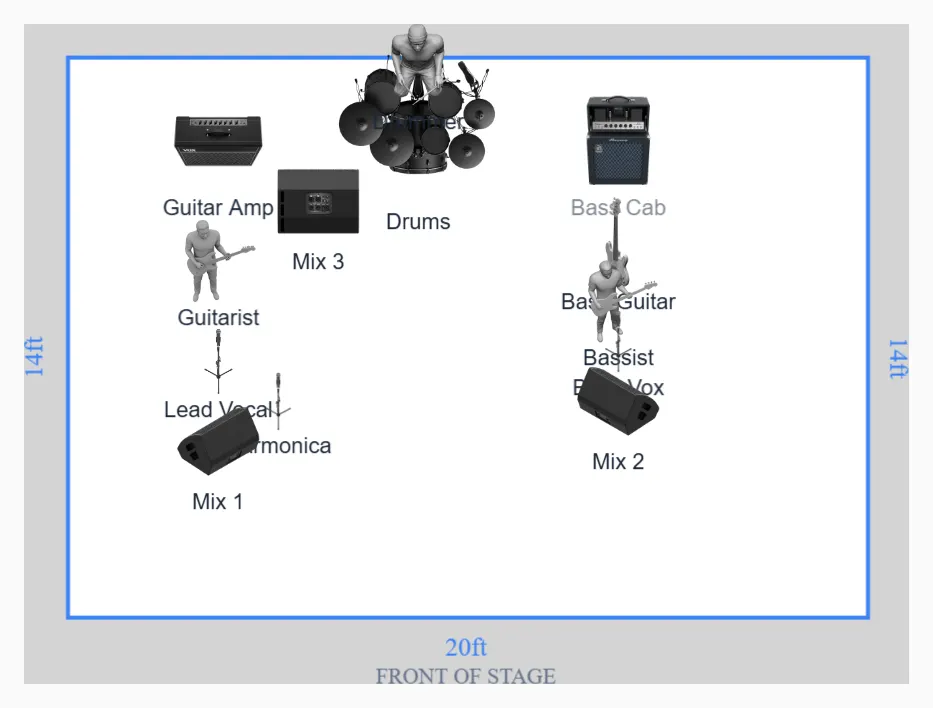
Two open mics, eighteen inches apart
Everything unusual about this plot is happening in one small patch of stage left. The guitarist stands at 5 feet across, sings into a vocal mic on a tripod boom 8 feet downstage, and has a second mic for harmonica a foot and a half away on the diagonal, set lower and slightly further out.
Eighteen inches between two live capsules is close. The three to one rule wants adjacent mics at least three times as far apart as they are from their source, so at 6 inches off the grille you want 18 inches minimum. This plot is exactly at the limit, not comfortably past it. That is fine, and it is deliberate, because a harp player has to reach both mics without moving their feet. It just means the engineer needs to know it before they build the channel, since the two mics will hear each other and no amount of EQ separates them afterward.
Flag the harmonica line explicitly in your advance. It is the one channel on this plot an engineer will not predict.
Bullet mic or SM58 is a routing question, not a tone question
A Green Bullet or any classic crystal harp mic is a high impedance element that expects to see a 1 megohm amplifier input. Plug it into a console preamp expecting 2 kilohms and it loads down, loses most of its low end, and sounds thin and honky in a way no console EQ recovers. That is the actual reason harp players insist on a harp amp, and it is worth understanding rather than arguing about.
So you have two real options. Run the bullet into a small tube amp and mic that amp, which gives you the compressed, saturated tone the genre is built on and adds a stage source you have to control. Or sing the harp through a standard dynamic on a stand into the PA, which is clean, quiet, and completely unromantic. This template draws the second, because it is what a trio playing one nighters actually does. If you bring an amp, put it on the plot as backline plus a mic channel and tell the venue.
Either way the harp channel is hotter than the vocal. A cupped harmonica at the grille puts 110 dB SPL or more into a capsule, well above a sung line, so it takes 10 to 15 dB less gain. Do not let it be gained as a second vocal.
A blues set covers 30 dB and the gain has to survive all of it
The dynamic range on this plot is the widest of any small band we template. A slow blues verse sits around 75 dB on stage. The same band on a shuffle chorus with the harp cupped hits 100 to 105. That is a 30 dB swing inside a single song, and it happens on purpose.
Gain for the loud part and let the quiet part be quiet. The common failure is an engineer setting the vocal preamp on a soft first verse, then chasing the fader down for the rest of the night while the channel clips. Ask for a line check at your loudest, not your most polite. Say it in the advance as well, since a note like "we play a genuine 30 dB range, please set gain on the loud material" is the sort of specific request the working with sound engineers guide argues for.
Backline that is deliberately small
The guitar combo sits at stage left and the 1x15 bass cab at stage right, 10 feet apart with the four piece kit at centre between them. A 4 piece kit and a 1x15 rather than a 4x10 is not a compromise, it is the point. This band gets its volume from playing hard on quiet gear, and the mic'd amp is doing the work of reinforcement rather than the amp shouting into the room. The drum mic guide covers what a 4 piece needs, which is usually kick, snare and a pair of overheads rather than a full close mic set.
The bass is taken direct with the cab shown as backline only, so it contributes one channel and not two.
Three wedges, and one of them points upstage
The guitar and bass wedges sit downstage in front of their players, which is ordinary. The drum wedge is the interesting one: it sits at 7 and a half feet across and 4 feet from the back wall, between the kit and the guitarist, firing upstage at the drummer.
That aim matters. Pointed that way, the wedge's rear is facing the vocal and harmonica mics 5 feet downstage of it, so the drummer can have real level without pushing the two most feedback prone channels on stage. If a venue turns that box around to face the room, ask them to put it back.
Ask for wedge content in writing rather than at soundcheck. A short monitor request sent with the plot gets you three usable mixes before the first song instead of during it.