Live Sound
How to Work With Sound Engineers as a Gigging Band
Practical advice for gigging musicians on communicating with front of house and monitor engineers, from advance paperwork through soundcheck to the show itself.
By Stageplot Pro Editorial Team Updated
The engineer is on your side, treat them that way
The house or touring engineer at your gig wants your band to sound good, it is literally their job for the night. Every friction point between bands and engineers usually comes down to timing and communication, not talent or effort on either side. Fix the communication and most of the friction goes away on its own.
Send your paperwork before you arrive
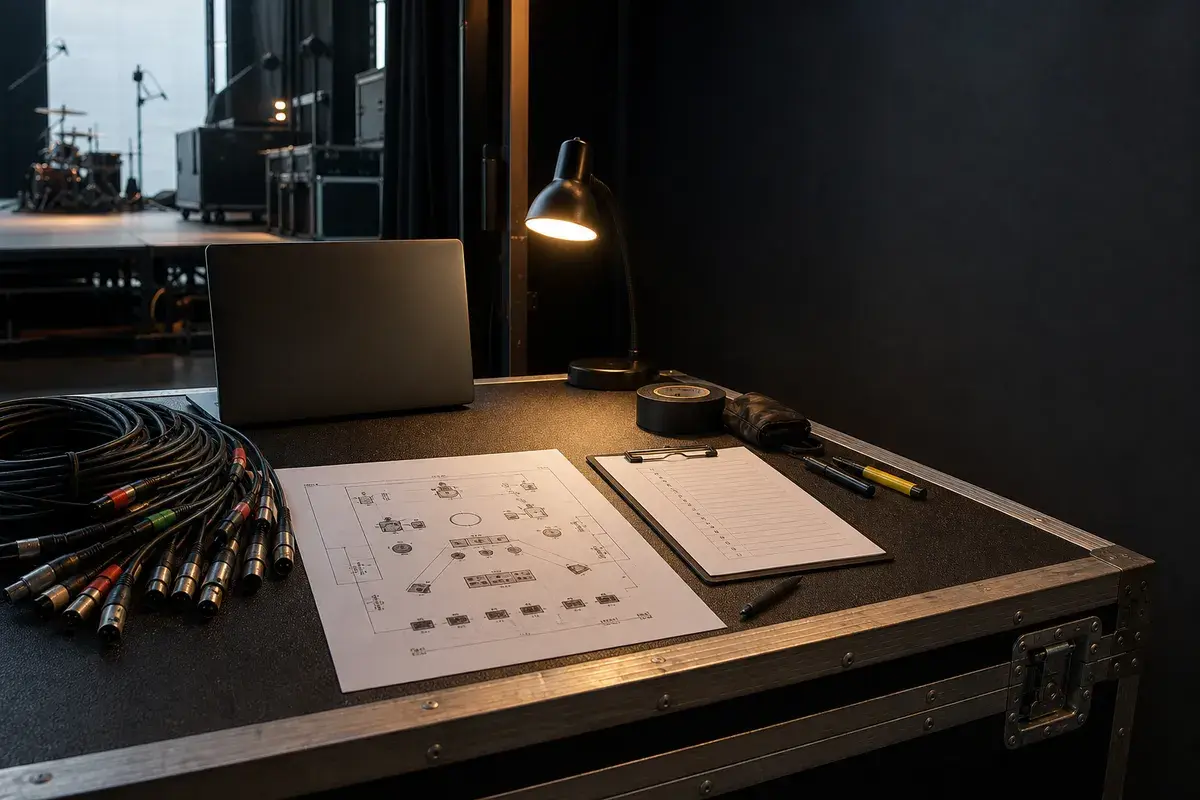
The single most useful thing you can do for an engineer is send your stage plot and input list ahead of the show, not hand over a printout at load in. An engineer who has seen your plot the night before can pre-patch and think about your monitor needs before you are standing in front of them with a clock running. Build it once in the Stageplot Pro editor and share the link, our tech rider guide covers what else belongs in that advance packet.
Arrive with your plot in hand, not in your head
Even if you sent your plot ahead of time, bring a printed or easily accessible copy on the day. An engineer mid-load-in does not want to dig through email to confirm which wedge goes to which player. Your plot should answer questions before they get asked.
Be specific during soundcheck
Vague requests slow soundcheck down because the engineer has to guess what you mean. More me tells them nothing useful. More kick in my wedge, less of my own vocal, tells them exactly what fader to move. This single habit, being specific instead of vague, is the fastest way to build trust with an engineer you have never worked with before. Our soundcheck guide covers the full flow this happens inside of.
Raise problems at soundcheck, not mid-song
If something is wrong, a dead channel, a monitor that is not coming up, say so clearly and immediately during line check or the monitor pass. Waving at the engineer from the stage mid-song, or worse, saying nothing and hoping it gets better, wastes everyone's time. A calm, direct flag during soundcheck gets fixed in seconds. The same problem discovered mid-set gets fixed on the fly, worse, and in front of the crowd.
Understand what they can and cannot fix live
An engineer can ride your monitor level and shape your tone with EQ and compression, but they cannot fix a broken cable, a dying battery, or a mic that was never patched because your input list did not match reality. Give them an accurate starting point and they can do their actual job, which is mixing, instead of troubleshooting your gear during your set.
If they run a console your plot can export to
If your engineer is on a Behringer X32 or Midas M32, or an Allen and Heath dLive or Avantis, Stageplot Pro can export a scene file or a Director CSV straight from your plot, so channel names and input order show up on their console without them retyping your input list by hand. Yamaha CL and QL export is built and going through verification before it ships. Ask ahead of time what desk the venue runs so you know whether this saves you time on the day.
Start from a plot the engineer already recognizes
An engineer who has mixed dozens of four-piece rock bands reads a plot built on a familiar layout faster than one built from scratch with an unfamiliar structure. Starting from a proven template like our four-piece rock band or jazz quartet template and adjusting it to your actual gear is not just faster for you, it is faster for the engineer too, since the input order and positioning already follow a pattern they have seen before. Save the fully custom layout for a lineup that genuinely does not fit any standard shape.
Tipping and small courtesies
A tip for the engineer at the end of a good night is appreciated in most club and bar settings, though it is not universal and never required. What matters more consistently is a genuine thank you, specific to something they actually did, your vocal never fed back, the monitor mix was spot on. Engineers do a lot of invisible work during a show, and a specific thank you tells them it was noticed, which goes further toward a good working relationship than a generic compliment does.
Multi-act nights and shared gear etiquette
On a bill with several bands, be mindful that the engineer is managing changeovers for everyone, not just you. Do not linger at the console asking questions during another band's set, save non-urgent requests for your own soundcheck window. If you are sharing backline with another act, confirm settings and positions with both the other band and the engineer before assuming anything was left the way you need it.
A good working relationship outlasts one gig
Engineers remember bands that show up organized and communicate clearly, and they remember the opposite too. A clean stage plot, a realistic input list, and specific requests at soundcheck build a reputation that gets you better treatment the next time you play that room. Word travels between engineers who work the same club circuit, and a band known for organized paperwork and calm soundchecks gets recommended for bigger nights. Our what sound engineers wish bands knew post goes further into this from the engineer's side of the console, and our stage plot mistakes guide covers the paperwork errors that undo all of this before you even arrive.