Jazz
Jazz Quartet Stage Plot Template for Club and Lounge Gigs
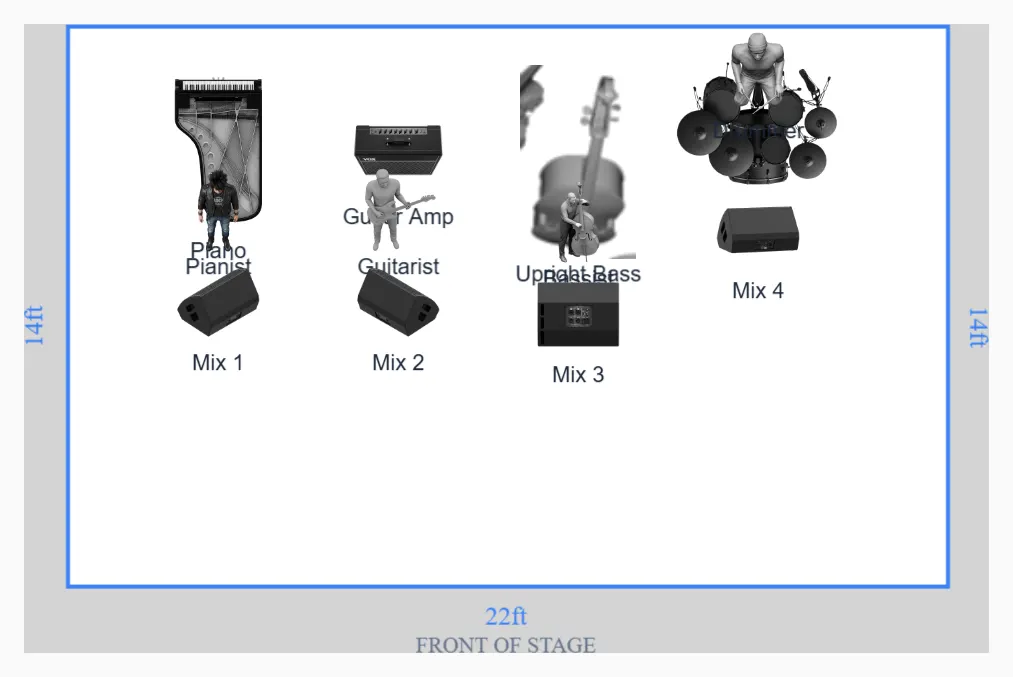
A jazz quartet stage plot template with piano, guitar, upright bass and a mic'd kit, plus a wedge for every player, ready to send to any club or lounge booking.
One amplifier on the whole stage, and it sets everyone's level
Add a guitarist to a piano trio and you have added the only electrically powered sound source in the band. Piano, upright bass and a four piece kit are all acoustic instruments with a ceiling set by human arms. A guitar combo has a volume knob, and wherever that knob ends up becomes the floor that every other player has to reach in order to be heard on stage. That is the single most consequential fact about this plot, and it is worth saying out loud at the first rehearsal rather than the third gig.
The practical version: get the guitarist to set their amp at the level they want to hear themselves at when nobody else is playing, then have the band play a medium swing tune and see whether the drummer had to push. If the drummer pushed, the amp is too loud, and the bass player is about to lose the argument entirely because an upright cannot be turned up.
Four positions across 22 feet, all on one line
The layout runs the band across the upstage edge of a 22 by 14 foot stage. The grand piano sits at stage left with the pianist behind it, the guitar rig sits about 4 and a half feet away with the guitarist beside it, the upright bass is at 14 feet across, and the four piece kit closes the line at stage right. Nobody is more than 14 feet from anybody else.
That single line is a compromise. It gives the audience a clean view and it gives the engineer four sources with reasonable separation, but it means the players are looking sideways at each other rather than inward. A quartet trading choruses needs eye contact more than a rock band does. If the room allows it, pull the bass and the guitarist a foot or two downstage so the four positions form a shallow arc, and put that on the plot as an actual position rather than something you rearrange at load in. Engineers do not care about the two feet, but they care about being told, and the working with sound engineers guide explains why the annotated version gets you more cooperation than the tidy one.
Two chordal instruments fighting for the same register
Piano and guitar comp in overlapping territory, and the mix cannot solve what the band has not sorted out. Front of house can pan them apart, roll a little 250 Hz out of one of them, and leave a hole in the middle for the soloist, but that is cosmetic if both players are laying down block chords in the same octave for the whole tune.
On the console side, keep the guitar mic tight and slightly off the cone centre. A jazz guitarist voicing a warm hollow body tone is already dark, and a mic pointed dead centre on an already dark amp arrives as mud that gets fixed by subtracting exactly the frequencies that carried the piano. Twelve channels is a reasonable total for this plot: a stereo pair in the piano, one on the guitar amp, one on the bass, and six to eight on the kit. Write those down in a named order before you send anything, using the input list template if you do not already have a house format.
Four wedges on a stage that is 14 feet deep
Each player gets a wedge, sitting between two and four feet downstage of their position. On a stage this shallow, that puts four boxes very close to two open piano mics and a bass mic, so the total monitor level available before something rings is genuinely limited. Spend it deliberately.
The wedge at the piano usually wants bass and a little guitar. The wedge at the bass usually wants piano and kick. The guitarist has an amp two feet away and rarely needs themselves at all. Ask for what you cannot already hear, and put the request in writing before the day using the monitor request template so the engineer builds four different mixes rather than four copies of one.
Edits worth making before you send it
- Horn instead of guitar. A sax or trumpet removes the amp entirely and the stage volume drops by a genuinely audible amount.
- Guitarist on a modeler direct. No amp on stage, one DI channel, and every monitor decision changes because the guitar now only exists in the wedges.
- Vocals on two or three tunes. Add the mic and the stand to the plot rather than borrowing one at the break.
- Tight club stage. Under 16 feet wide, drop the drum wedge first. The kit is 4 feet from the bass already.