Metal
Metal Five Piece Stage Plot Template for High Gain Shows
A metal five piece stage plot template with two guitar stacks, DI bass, a fully miked kit and a frontman, plus in-ears on drums for a loud, high gain live show.
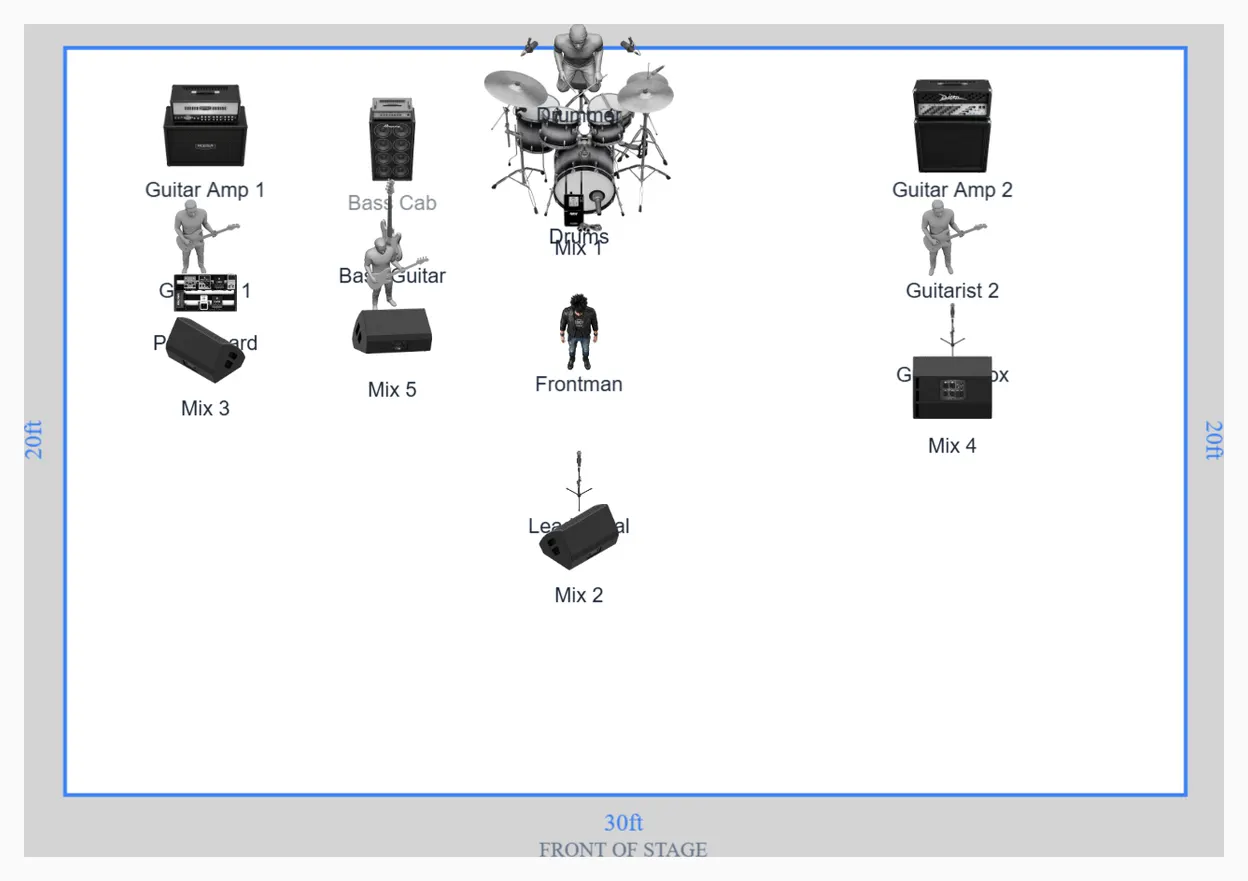
Twenty feet between the two guitar rigs, and that is the point
A metal plot is not hard to draw. It is hard to make true, because the thing that ruins a metal show is almost never the layout. It is stage SPL. Five players, two full stacks and an 8x10 put more acoustic energy into a club than the PA does, and every decision on this page exists to claw back headroom before front of house has touched a fader.
The footprint is 30 by 20 feet. The micd five piece kit sits centre at x15, two and a half feet off the upstage edge. Guitar 1 runs a 4x12 style stack at stage left x5. Guitar 2 runs a Diezel VH4 into a 4x12 at stage right x25. That is 20 feet of separation between the two cabinets, and it is the most useful number on the whole page. Twenty feet means each player hears their own rig clearly without the other one smearing into it, and it means front of house gets two guitar close mics that are not mostly picking up the other guitarist.
Cab aim decides how loud your vocal can get
Both stacks sit at y2.5, upstage, firing straight down the deck. At standing head height, that beam runs into the back of the vocal capsules at x15 y12 and x25 y8. Ten feet of air does not attenuate a half stack in any way you will notice.
Two fixes, both free. Tilt the cabinets back onto a stand so the useful axis lands on the player's ears instead of the singer's shoulder blades, and angle each one 15 to 20 degrees so no cabinet is on axis with a microphone. The close mic on the grille does not care where the box points. Your gain before feedback cares enormously.
On the mic position itself, a dynamic about an inch off the grille, somewhere between the centre of the dust cap and the edge of the cone. Centre is bright and aggressive, edge is darker and rounder. On a high gain rig the off axis edge position is usually the one that survives a full mix, because the centre position hands the engineer 3 to 5 kHz that is already the most crowded region on the stage. Decide before you arrive and put it in the advance, or somebody picks for you at 4:45pm. The tradeoffs are in the live mic selection guide.
Why the drummer is the only one on ears
The plot puts an IEM pack at the kit and four wedges on the floor for everyone else. That hybrid is not a compromise, it is the correct answer for this band. The drummer is the one player who needs a click, needs the guitars at a level the stage cannot supply naturally, and sits behind the loudest acoustic source in the building. Sealed ears solve all three at once and remove the one wedge that would otherwise be fighting eight open drum mics. The full argument sits in the wedges versus in ear monitors guide.
Everyone else stays on wedges because the guitars and bass already hear themselves from their own cabinets. Their wedge is a vocal mix with a little kick and snare, nothing more.
If you run triggers, samples or a click, say so in writing. Triggers change what the drum mics are for, a click needs a dedicated send, and playback needs channels nobody allocated. None of that is visible on a drawing.
Low end: two sources, one frequency range
The 8x10 bass cab sits at x10, five feet from the kick drum and five feet from Guitar 1. It carries no line to the console. The bass itself goes direct, which means front of house is mixing a DI while the room is hearing a fridge. Those two rarely agree.
Two practical consequences. First, the kick and the bass cab are close enough that low end builds in the same corner of the stage, so ask the engineer to check for buildup there rather than assuming the room is muddy. Second, if your tone genuinely lives in that cabinet, ask for a mic on it as well as the DI and let the engineer blend. A dynamic near the top left driver, off centre, gets you most of the way there.
Changing this plot without breaking it
- One guitarist instead of two. Move the remaining rig to x15 behind the kit rather than leaving it in a corner. A lone stack at the edge sounds like a lone stack at the edge.
- Smaller stage. Under 24 feet wide, the two stacks end up under 15 feet apart and start bleeding into each other. Turn down before you turn around.
- Fly dates with shared backline. Note the cabinet you need, not the amp you own. Heads travel, 4x12s usually do not.