Stageplot Pro Team /
A Function Band Stage Plot That Survives a Dep Drummer
Keep the riser, kit layout and monitor world identical each week so a dep drummer can sit in from one read of your stage plot, with no rebuild at soundcheck.
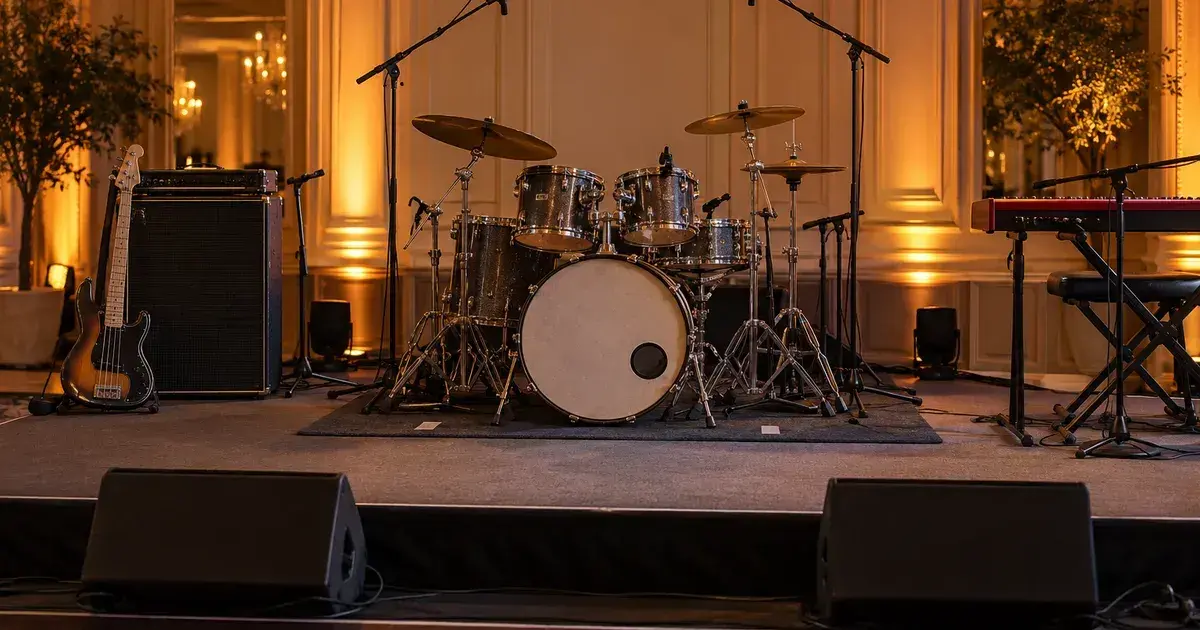
Function bands live on rotation. The singer and the bandleader are usually fixed, but the drum chair might hold three different people across a month of weddings and corporate dinners. Every one of those players arrives cold, often straight from another gig, with a short setup window and a room full of guests arriving soon after. The stage plot is what decides whether that dep sits down and plays or spends the first half hour asking where things go.
This guide is about one goal: a riser layout and monitor world that stay identical week to week, so a new drummer can understand the whole job from a single read through.
Why does a dep drummer need a different kind of stage plot?
A dep drummer needs a plot that describes a fixed system, not a one off arrangement. Your regular player already knows where the click comes from and which wedge belongs to whom. A dep knows none of it, so the document has to carry everything that would otherwise live in someone's head.
Most band plots are written for the venue: they tell the house engineer how much stage you need and how many channels you will use. A function band with a rotating drum chair has a second reader. The dep needs to see where the kit sits relative to the bass and keys, where the in ear pack or wedge lives, what power is on the riser, and which pieces of the setup are theirs to change.
That last point matters most. Divide the drum area into two zones on the plot. The fixed zone is everything the band owns and keeps constant: riser position, mic positions and channel numbers, monitor feed, click source, talkback, power. The player zone is the kit's internal arrangement, throne height, cymbal choice and stick bag. When the plot makes that boundary obvious, a dep can adjust their own comfort without disturbing the system everyone else relies on.
If you are building the drawing from scratch, start with the step by step guide to making a stage plot and then apply the dep specific detail below on top of it.
What should the drum riser section of the plot lock down?
The riser section should fix the riser's footprint, its position on stage, the direction the kit faces, and where every mic stand and power drop lands around it. Those four things are what the rest of the band builds from, so they should never vary between deps.
Draw the riser to scale with its real dimensions and height, and keep it in the same spot on every plot, normally upstage centre. Describe neighbours from the performer's point of view facing the audience: if your bass player always stands at stage right of the riser, which is the audience's left, write it that way every time so nobody has to translate.
A few physical habits turn the drawing into something a dep can match in minutes:
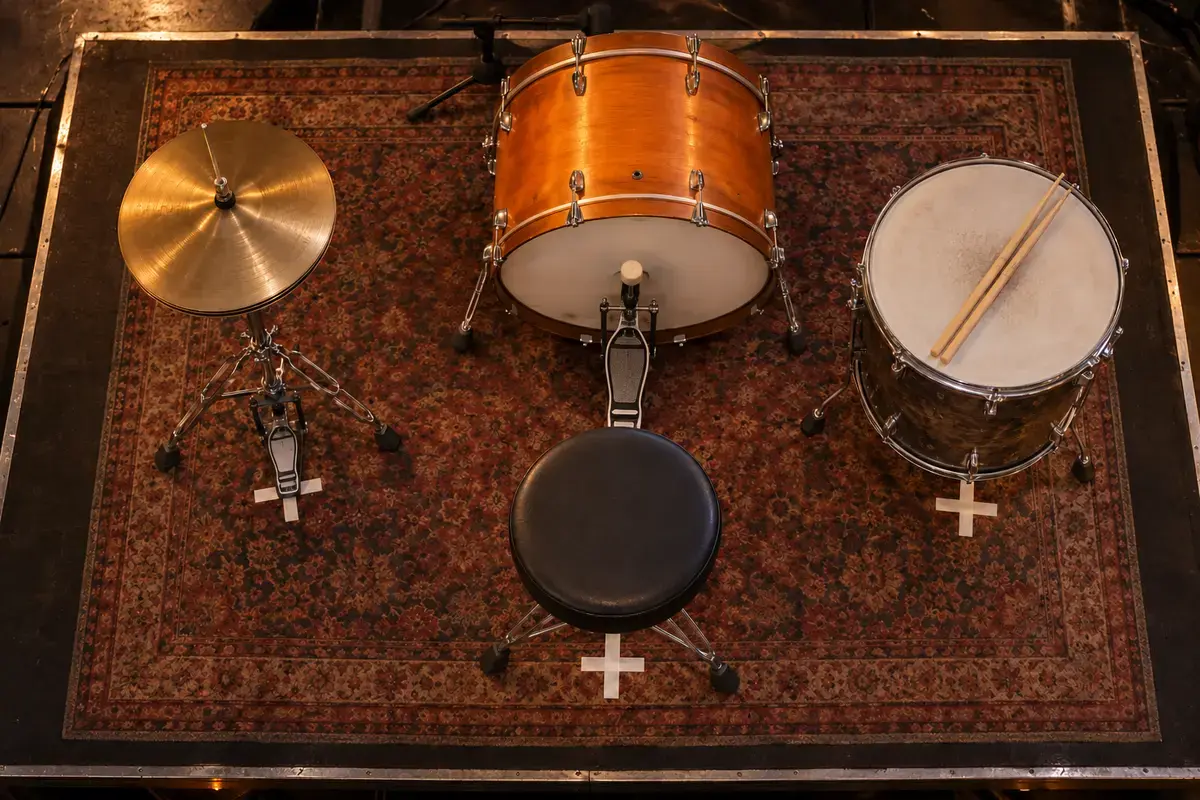
- Carry one drum rug that lives with the band, and spike the kick, throne and hi hat stand positions on it with gaffer tape.
- Mark the rug's front edge so it always lands parallel to the riser lip.
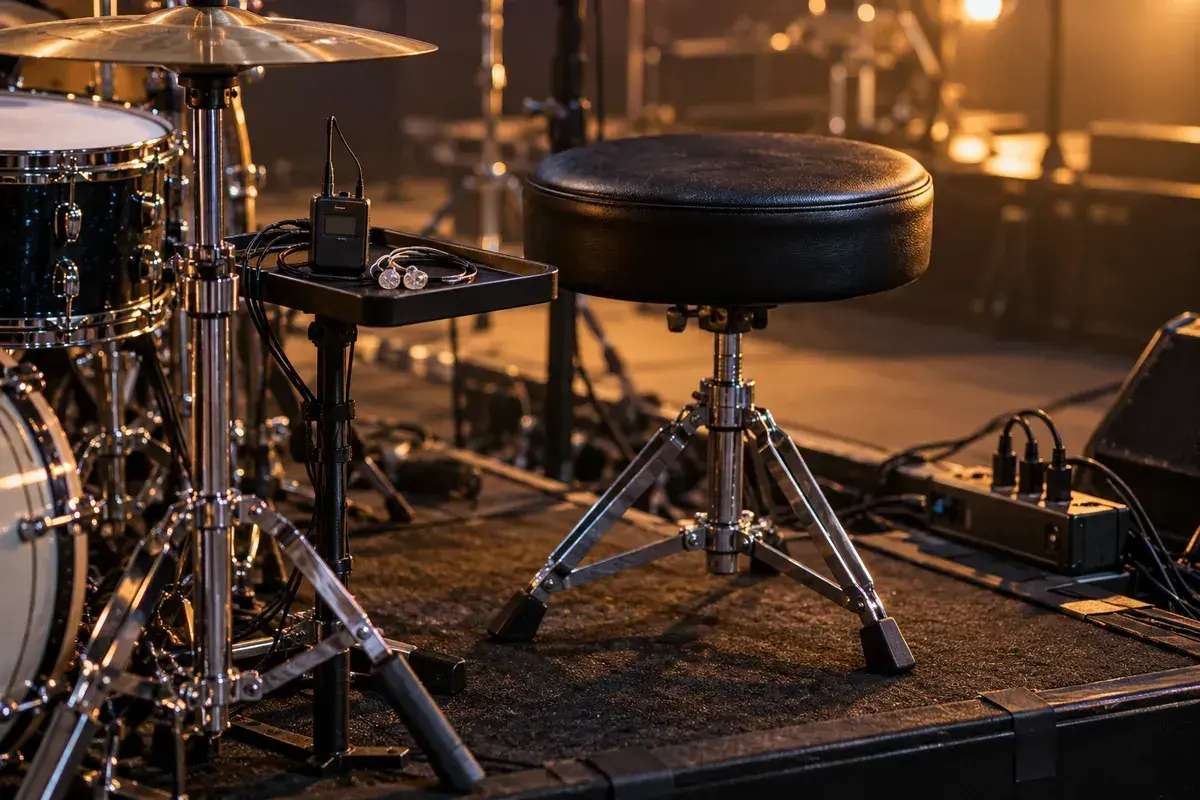
- Note where the power strip sits, for example behind the throne on the drummer's left, and what plugs into it: in ear transmitter, sample pad, click device, any fan or riser light.
- Show the sample pad position if your sets use one, along with whether it outputs stereo or mono.
- Mark the mic stand positions for overheads and kick so they stay put even when a dep uses a different kit.
If a dep brings their own kit, the rug marks still give them a footprint to land on. If they play the band's kit, the marks mean the kit goes back exactly where the previous player had it, which keeps your mic placement and sight lines consistent.
Plan for the left handed dep before it happens. A mirrored kit moves the hi hat and floor tom to the opposite sides, which can swap where the overhead stands and the hi hat mic need to go. Add a short note on the plot covering what changes in that case, so nobody discovers it while the guests are sitting down to dinner.
How do you keep the drum monitor world the same every week?
Keep the drum monitor world the same by building it once, saving it as a named mix for the drum chair rather than for a person, and recalling that mix every gig. The dep inherits a finished blend and only fine tunes level.
Write the monitor plan as a short list of what feeds the drum mix and roughly how prominent each source is. A typical function band drum mix might look like this:
- Click and count ins, clearly on top
- Bass guitar or bass DI, close behind
- Keys, enough to hear chord changes
- Lead vocal, for following the arrangement
- Bandleader talkback, for cues and set changes
- Kick and snare, only if the dep asks for them
That is a monitor mix, not an input list. The input list says what each channel is. The monitor plan says what this one performer hears. Keep them as separate sections so neither gets confused for the other.
If the band carries its own in ear rack, label the drum send with a role name such as Drums IEM and save it in a scene the console can recall. Many digital consoles also let you protect selected channels or settings from scene changes, which helps stop a show recall from overwriting a mix a dep has just adjusted.
Personal bodypack control helps here too. On Shure's PSM 300 system, for instance, MixMode lets a performer blend two mono feeds from the bodypack, so a dep can lean toward the click feed or the band feed without asking the engineer. Put that on the plot: which feed is on which side, and which way to turn the knob.
For wedge setups, show the drum fill or wedge position on the riser and note its aim. A wedge that moves a foot between gigs changes what the drummer hears and how much it bleeds into the overheads.
Write the hearing handoff in plain words as well. A dep should know whether to bring their own earphones, which connector the pack expects, and whether the click lives on a separate device they need to start.
Which inputs should never move on the channel list?
The drum channels, click, playback and talkback should keep the same numbers and names on every show, no matter who is behind the kit. A fixed channel layout is what lets the scene recall work and lets the engineer line check from memory.
A common drum block looks like this:
- 1
Kick - 2
Snare - 3
Hats - 4
Rack Tom - 5
Floor Tom - 6
OH L - 7
OH R - 8
Spare Tom - 9
Pad L - 10
Pad R
The reserved spare is the important part. A dep with a second rack tom or an extra floor tom takes channel 8, and nothing downstream renumbers. Without that slot, one extra drum shifts every bass, guitar, keys and vocal channel, which breaks both the saved scene and the house engineer's patch.
Label by source, never by player. Kick stays correct no matter who is playing. A channel named after last month's drummer will mislead the next engineer who reads it. Keep the click and any playback on their own clearly labelled channels, and note on the list that the click goes to monitors only, never to front of house.
What does the dep need to receive before the gig?
The dep should receive the current stage plot, the input list, the drum monitor plan, the setlist with tempos and cues, and the logistics for the day, all in one message well ahead of the show. One complete package beats five separate texts sent the night before.
Function gigs carry structure that bar sets do not: a first dance, speeches, a cake cut, a late set after a DJ break. A dep needs to know where those moments fall and who calls them. Add the following to the setlist:
- Tempo for every click song, and which songs are played without the click
- Who counts each song in, and whether that happens through talkback
- Any specific endings, medleys or segues the band plays without stopping
- The cue for the first dance and how it should begin
- Which songs need the sample pad and which patch to load
The band advance email template is a good structure for the venue side of this. Use the same habit internally: date the attachments, state the load in and line check times, and ask the dep to confirm they have the current version. If your plot has changed since their last booking, say exactly what changed.
How do you run a five minute check when the dep arrives?
Walk the dep through the fixed zone in a set order, then let them set up their player zone, then run a short line check with them on headphones or wedges. Keeping the order the same every week makes it fast, because the band runs it from habit.
A simple routine:
- Point out the rug marks, power drop and monitor pack before any drum comes out of a case.
- Let the dep build the kit on the marks while mic stands stay in their spiked positions.
- Line check the drum block in channel order, starting with the kick.
- Run the click and talkback, then confirm count ins reach the drum mix.
- Play one short section of a song together and adjust only drum monitor level.
If the plot and the saved scene are accurate, nothing in this routine should need rewiring. When a step fails, fix the plot as well as the stage, so the next dep never runs into the same gap.
What usually breaks when a new drummer sits in?
The common failures are a click that only works when the regular drummer starts it, monitor changes that never got written down, and a plot that still shows last season's kit. Each one comes from information stored with a person instead of in the document.
Watch for these specifically:
- The click or playback device belongs to the regular drummer and leaves with them.
- A scene was tweaked for one player, and the dep inherits a blend that suits nobody.
- The riser size in the plot does not match the riser the band actually carries.
- A sample pad or extra cymbal is wired but missing from the input list.
- Talkback was routed to one specific earpack instead of the drum mix.
Treat each of these as a reason to revise the plot. After every gig with a new drummer, ask what they had to figure out on their own, and write that answer into the next version.
A dep should be able to play your show from the documents alone. Anything they had to ask about belongs in the plot next week.
The band that runs the same system every week stops relying on whoever happens to remember how it works. The plot, the input list and the drum mix become the memory, and the drum chair becomes a position anyone qualified can fill.
Frequently asked questions
- Should a dep drummer bring their own kit or play the band's kit?
- Either works if the plot fixes the footprint. If the band supplies the kit, the dep only adjusts throne height and cymbal angles. If the dep brings their own, the drum rug marks, spiked mic stand positions and reserved spare channel let their kit slot into the same layout without renumbering the input list or moving the monitor feed.
- What should the stage plot say about a left handed dep drummer?
- Add a note describing what changes when the kit is mirrored: the hi hat and floor tom swap sides, the hi hat mic and possibly an overhead stand move, and the power strip or sample pad may need to sit on the other side of the throne. Channel numbers and names should stay the same so the saved console scene still works.
- Does a dep need in ear monitors if the regular drummer uses them?
- If your click, count ins and talkback reach the drummer through in ears, the dep needs to be on the same system or the show structure falls apart. State on the plot which connector the pack expects and whether the dep should bring their own earphones, so they arrive ready to plug in.
- How far ahead should a dep drummer get the stage plot and setlist?
- Send the full package as soon as the booking is confirmed, and resend a dated version if anything changes. That gives the dep time to learn tempos, cues and arrangements, and to raise kit or monitor questions before the day rather than during line check.