Basics
Stage Left vs Stage Right: A Clear Guide for Bands
Learn stage left and stage right from the performer perspective, label orientation correctly, and prevent mirrored layouts during venue setup and load in.
By Stageplot Pro Editorial Team Updated
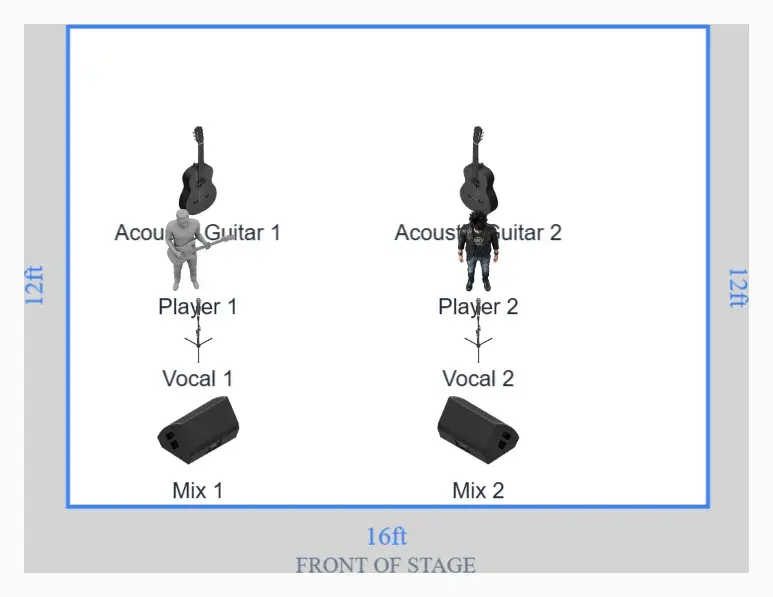
The rule that never changes
Stand on stage and face the audience. Your left hand points toward stage left. Your right hand points toward stage right. The terms do not change when the sound engineer, audience, or camera looks toward the stage.
This convention lets performers and crew give directions without depending on where the speaker happens to be standing. If a stage manager calls for the guitar amplifier to move farther stage right, everyone should understand the same destination.
| Term | Meaning |
|---|---|
| Stage left | Performer’s left while facing the audience; audience’s right |
| Stage right | Performer’s right while facing the audience; audience’s left |
| Upstage | Farther from the audience, usually toward the rear wall |
| Downstage | Closer to the audience and front edge |
| Centre stage | The middle of the performance area |
Why stage plots get mirrored
Most plots are viewed from above with the audience at the bottom of the page. That makes the diagram look as if the reader is standing behind the performers, which can tempt someone to label the page from the audience's perspective.
The fix is simple: place a clear AUDIENCE label or arrow along the downstage
edge and add stage-left and stage-right labels. Do not rely on an unexplained
L and R; those letters might refer to house left and right, stereo channels,
or the reader's own viewpoint.
House left and house right
Some venues use house left and house right when discussing seats, PA coverage, lobby doors, or audience areas. House left is the audience's left while facing the stage, so it is opposite stage left.
Use stage directions for performer and equipment positions. Use house directions only when talking about the audience side of the room, and write the full term when both systems appear in the same advance.
Upstage and downstage
Upstage means away from the audience; downstage means toward the audience. A drum kit is commonly described as upstage centre. Lead vocals often work from downstage centre or downstage left/right positions.
These terms are more precise than front and back, which can reverse meaning
depending on whether the speaker is thinking about the room, stage, or truck.
How to label a stage plot
- Draw or select the stage boundary.
- Mark the audience-facing edge before placing equipment.
- Put
STAGE LEFTandSTAGE RIGHTnear the appropriate sides. - Place permanent or shared backline first.
- Add performer positions and verify them while imagining the band facing the audience.
- Ask one bandmate to check the result without coaching them.
The acoustic duo example above makes the relationship easy to see: each performer has a distinct side, and the audience edge establishes the viewpoint.
Directions during load-in
If the venue crew uses different language, clarify once before equipment moves.
Pointing and saying your left can work in the moment, but it should not replace
standard directions in the advance paperwork. On a noisy stage with several
departments working at once, standardized terms prevent expensive moves in the
wrong direction.
Frequently asked questions
Is stage left the audience’s left?
No. Stage left is the performer’s left while facing the audience, which appears on the audience’s right.
What does upstage mean?
Upstage is the area farther from the audience. Downstage is closer to the audience and front edge.
Should a stage plot use house left and right?
Use stage left and right for performers and equipment. Reserve house left and right for audience areas, PA coverage, or venue features.
Field workflow: turn the advice into a usable advance
Stage directions are stated from the performer’s perspective while facing the audience. House left and house right are the opposite. A plot without an explicit audience edge forces the crew to guess which convention the author used, so show downstage at the bottom, label the audience, and write stage left and stage right directly on the drawing.
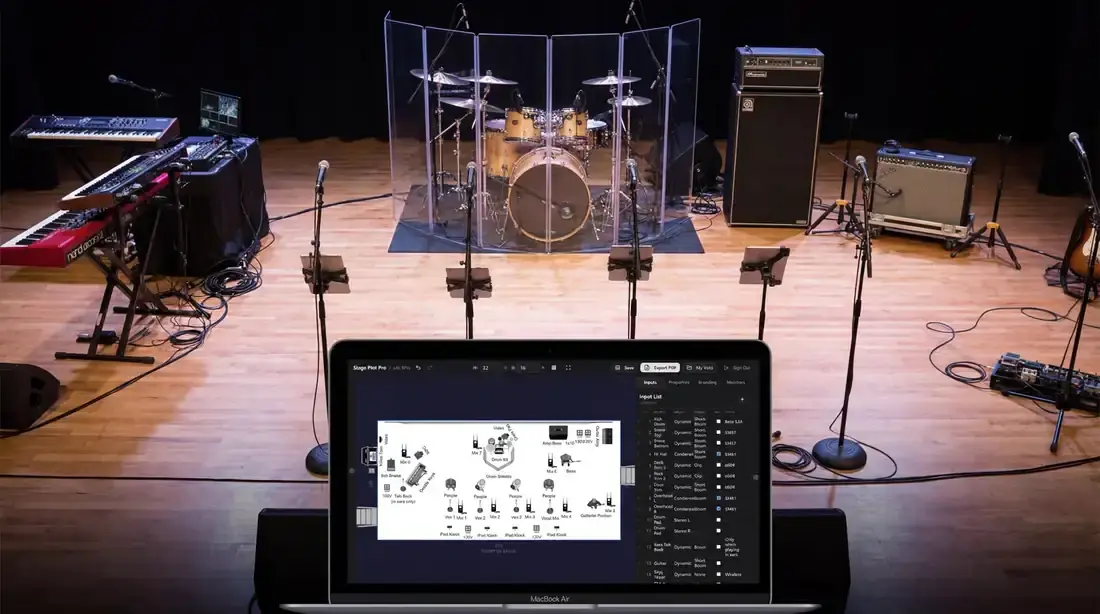
Use this workflow
- Draw the stage as an overhead rectangle.
- Place the audience edge at the bottom unless a venue requests another convention.
- Label stage left and stage right before adding performers.
- Use the same direction words in the input list and advance email.
- Check all stage-box, power, and backline notes against that orientation.
Working example
If the guitarist stands on the audience’s right, that performer is at stage left. A venue email saying the snake head is “left” is ambiguous until the sender specifies stage left or house left. Reply with the full convention and update the drawing so the cable plan cannot be mirrored accidentally.
Engineer’s note
Orientation errors affect more than appearance. They can place the stage box on the wrong side of a drum riser, send a keyboard loom across a traffic path, reverse wireless and monitor positions, or put a tall amplifier in front of a sightline. Treat direction labels as infrastructure information.
Adapt it to the venue without losing the source of truth
Keep one master document for the traveling lineup, then make a deliberate venue or format revision when the stage, backline, channel capacity, monitor system, or performer count changes. Put the revision date in the file and on the page. If a venue proposes a substitution, record the accepted change in the advance thread instead of quietly turning it into a permanent requirement.
When resources are limited, reduce the plan in an agreed order. Protect the sources and outputs that carry timing, pitch, safety, and show control first; simplify preferences second. A tested mono playback feed, shared wedge plan, reduced drum-mic package, or alternate backline choice is useful only when the band has approved it before the changeover clock starts.
Run a two-minute production review
Read the finished package from the perspective of a technician meeting the act for the first time. Count the physical connections, identify the artist handoff points, trace private cues to their destinations, and separate facts from requests. Then compare the terminology across the plot, list, rider, cable labels, and email. A source with three different names becomes three separate troubleshooting questions.
After the show, capture only changes that will travel. Update the master for a new performer, instrument, output, monitor system, or permanent rig change. Leave one-night venue substitutions in the date notes. This keeps a useful local workaround from becoming inaccurate information on every future advance.
Final verification
- Audience edge is visible.
- Stage left/right are printed.
- Email uses the same convention.
- Cable and power notes follow the drawing.
Ask someone who did not build the document to review it for two minutes. If they cannot identify the performers, inputs, monitor plan, ownership, and unresolved questions without coaching, revise the labels before sending it. A fast independent read is the closest rehearsal for how production will use the material.