Punk
Punk Four Piece Stage Plot Template for DIY and Club Gigs
A punk four piece stage plot template with guitar, bass, drums and a frontman on lead vocal, sized for a small stage so load in and soundcheck stay fast.
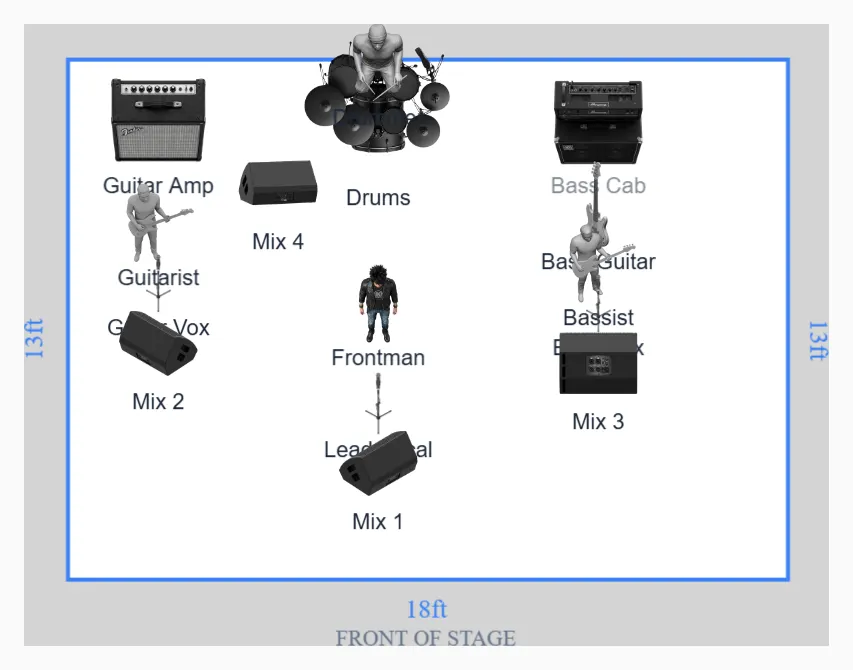
Eighteen by thirteen feet is the whole design brief
Every decision on this plot comes from one number: 18 feet wide by 13 feet deep. That is 234 square feet, and by the time you put a kit, two amps, four people and four wedges on it, there is roughly enough clear floor left for the frontman to move and nothing else. Most punk plots fail because they were drawn as if the stage were 30 feet wide and then squeezed on the night. This one starts squeezed.
The drum kit sits centre at 9 feet across and only 1.5 feet off the upstage wall, which is as far back as it goes. The guitar amp is at 3.5 feet in, the Ampeg bass cab is at 14.5 feet in, and both are tight to the back wall at 2 feet deep. That leaves the downstage half of the deck for the band, and it is already crowded, because four floor wedges eat the front edge.
Backline against the wall, and what that does to the mix
Two amps three feet from a hard back wall will load up in the low mids and throw that energy straight into the drum overheads. You cannot move them, so the fixes are the cheap ones: turn the amps in slightly toward the centre rather than firing straight out, and let the engineer mic off axis. A dynamic pointed at the edge of the cone instead of the centre pulls a couple of dB of harshness out of a bright amp without anybody touching a tone knob mid set.
The louder truth is that on a stage this small, the amps are already covering the front two rows on their own. Front of house is mostly reinforcing vocals and kick. If the guitar amp is set for a 400 capacity room, the engineer has nothing left to work with, and the vocal is the thing that loses. Most of the classic stage plot mistakes come down to gear that was sized for a bigger room than the one you booked.
Three mics, and all of them are going to get hit
The frontman works centre with a vocal mic at 9 feet in, and both the guitarist and bassist have their own mics for gang vocals. That is three vocal channels for a four piece, which is more open mics than most punk bands realise they are asking for.
Two things follow. First, durability: standard dynamic handhelds on solid stands are the right call, and the tripod bases on this plot are drawn on purpose because a round base slides when somebody lands on it. Second, bleed. Three open mics inside an 18 foot span with two amps behind them is a lot of guitar arriving on the vocal channels. Ask the engineer to gate or simply ride the two backing mics rather than leaving all three open, and expect them to keep the wedge level lower than you want.
Four wedges for four people and a twelve minute changeover
Wedge 1 is at the frontman position, 2 at the guitarist, 3 at the bassist, and 4 sits at 6.5 feet in aimed back at the drummer. Four wedges means four aux sends, and plenty of small club consoles only have four. Ask early whether all four are available. If only two or three are, the answer is to share: put guitar and drums on one mix and keep the frontman's send private, because the lead vocal is the only mix on this stage that genuinely cannot be compromised.
Changeovers on a four band DIY bill run 10 to 15 minutes, which is not enough time to build four monitor mixes from scratch. The realistic version is that you get one line check and the wedge mix you asked for in writing. That is why the plot goes to the promoter days ahead, not the day of, and why a short gear checklist taped inside the guitar case beats remembering things at 6pm.
Shared backline changes this plot completely
On a lot of punk bills the kit and cabs stay put and only breakables move. If that is the show, mark clearly which pieces on the plot are yours and which are house. A drummer who brings a snare, cymbals and a pedal to a shared kit needs a different note on the plot than one hauling a full kit up two flights of stairs. The etiquette and the labelling conventions are in the shared backline guide.
- No frontman, guitarist sings lead. Drop to two vocals and move wedge 1.
- House kit only, no cabs. Both amps come off the plot and become a note.
- Even smaller stage. Lose a wedge before you lose a mic, and share the mix.