Planning
Shared Backline Stage Plot Guide for Festival Bands
Make a shared-backline stage plot for festival and multi-band shows, clearly separating house gear, band gear, substitutions, changeover needs, and inputs.
By Stageplot Pro Editorial Team Updated
A shared-backline plot is a changeover document
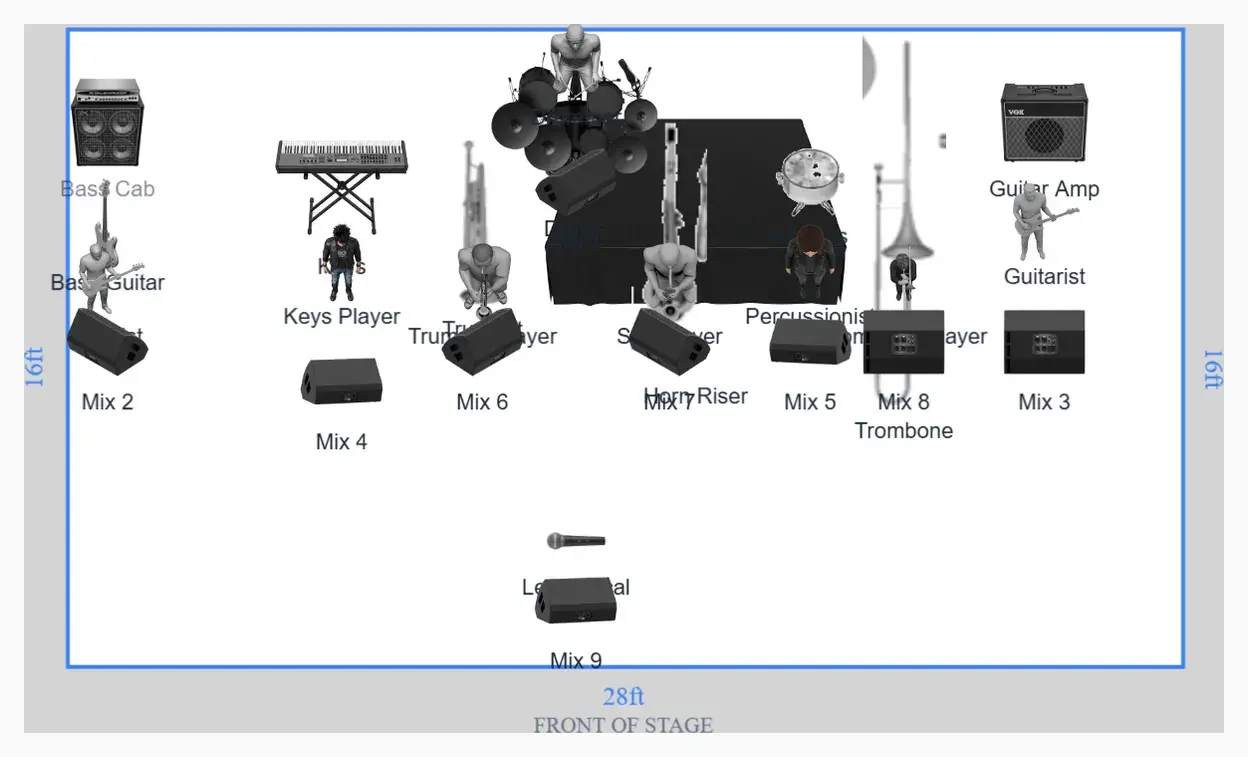
At a festival or multi-band bill, a stage plot does more than show where your band stands. It tells the stage manager what can remain in place while the previous act leaves, what your crew must roll on, and what sources still need to be patched. A generic club plot that shows every amp and drum component as if the band brings it can be actively misleading when the festival supplies a house kit and bass rig.
Use a dedicated version for the event. Keep your full club plot for dates where the band carries its own backline.
| Item on the plot | Label and advance note |
|---|---|
| Drum kit | House kit - band brings cymbals, snare, pedal, throne if applicable. Confirm included hardware. |
| Bass amplifier | House bass rig - DI required or cabinet mic requested; state the permitted substitution. |
| Guitar amplifier | Artist-provided combo or shared house cabinet; confirm whether the artist brings head, pedalboard, and mic preference. |
| Keyboard stand and DI | Venue-provided or artist-provided; list separately because a keyboard without a stand or DI pair is not stage-ready. |
| Monitor position | House wedge or artist IEM station; include mix number and physical location. |
Draw what stays and what moves
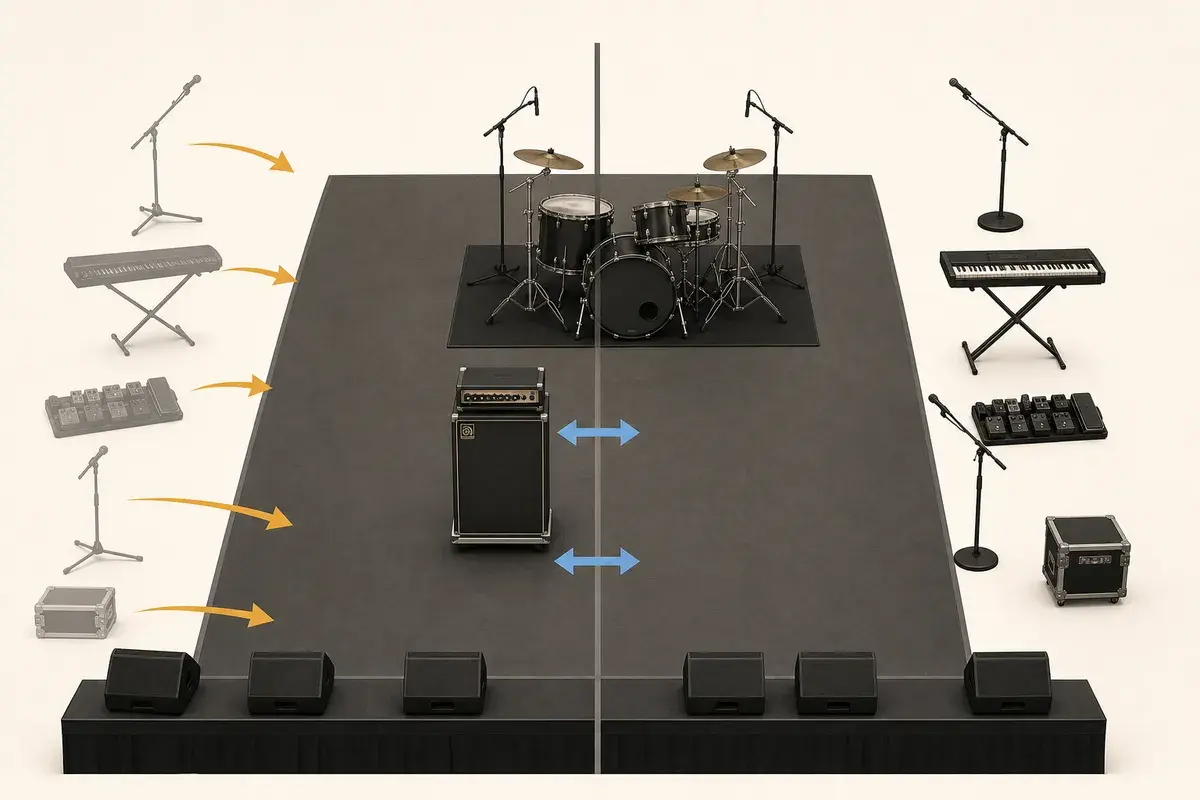
Use a simple visual convention: label house gear HOUSE and artist gear
ARTIST. The stage manager should be able to see at a glance that the drum
kit remains on the riser while your pedalboards, cymbals, snare, and vocal
mics move on. Avoid cluttering the plot with every accessory unless it affects
placement, power, patching, or changeover order.
If the stage uses a rolling drum riser, shared keyboard position, or fixed side-fill placement, show it. If a horn line needs music stands or a guest vocal mic appears for only one song, note it concisely. The goal is a working map, not a decorative diagram.
Confirm the actual substitution
“House backline available” is not enough information. Ask what make, model, condition, and included hardware are available when the exact item affects your show. Then decide what is a hard requirement and what can be substituted. For a bass rig, a reliable DI may matter more than a specific amplifier. For a drummer, the usable hardware and pedal compatibility may matter more than the brand on the shells.
Put those decisions in the rider or band advance email, not as a dense paragraph inside the drawing. The plot should point production to the physical plan; the advance records the agreement.
Simplify the patch for the available clock
Shared-backline shows often have limited changeover time. If the festival has twenty minutes, a fully mic’d drum kit, extra guitar cabinets, and an unannounced playback rack can turn a good plot into an impossible setup. Use the confirmed time to choose a realistic mic count and monitor plan. When a source is artist-provided and needs special patching, make it visible in the input list early.
The festival stage plots guide covers the broader decision of creating a lean festival version without overwriting the band’s normal show file.
Send the plot with a short changeover note
In the advance, add a short operational summary: House kit and bass rig remain. Artist rolls on two guitar boards, keyboard rig, four vocal stands, and playback rack. Estimated changeover: 12 minutes with two hands. It gives
production something actionable without asking them to infer the plan from
icons.
Frequently asked questions
Should shared backline appear on the stage plot?
Yes. Draw it where it will sit and label it as house or shared gear so stage crew know it remains in place.
Can I use my normal club plot for a festival?
Only if it matches the festival’s actual stage, backline, monitor, and changeover plan. A dedicated version is usually clearer.
Do I list cymbals and drum hardware?
List items that the band brings or that affect compatibility. A note such as “artist brings cymbals, snare, and kick pedal” prevents incomplete assumptions.
Field workflow: turn the advice into a usable advance
Shared backline works only when ownership, substitutions, and changeover moves are settled in advance. The plot should distinguish the equipment that remains onstage from the artist package that rolls in. A single amplifier icon cannot communicate cabinet model, head ownership, pedalboard position, or whether the artist accepts the supplied alternative.
Use this workflow
- Mark shared gear and artist gear with different labels.
- List acceptable drum, amplifier, and keyboard substitutions.
- Show risers and rolling packages in final performance positions.
- Keep artist looms and pedalboards grouped for fast placement.
- Document what is removed between acts as well as what arrives.
Working example
A festival band may accept the shared drum shells and bass cabinet while bringing cymbals, snare, kick pedal, guitar head, pedalboards, and stereo keyboard DI. The stage plot shows the shared shells and cabinet already in place, with arrows or labels for the incoming artist packages and their final landing zones.
Engineer’s note
Backline sharing does not automatically mean microphone sharing. Confirm whether drum microphones, amplifier microphones, DIs, looms, and stands remain patched. Preserving the patch is often the real time saving; changing a shell or amplifier may be quick compared with rebuilding and verifying the entire input path.
Adapt it to the venue without losing the source of truth
Keep one master document for the traveling lineup, then make a deliberate venue or format revision when the stage, backline, channel capacity, monitor system, or performer count changes. Put the revision date in the file and on the page. If a venue proposes a substitution, record the accepted change in the advance thread instead of quietly turning it into a permanent requirement.
When resources are limited, reduce the plan in an agreed order. Protect the sources and outputs that carry timing, pitch, safety, and show control first; simplify preferences second. A tested mono playback feed, shared wedge plan, reduced drum-mic package, or alternate backline choice is useful only when the band has approved it before the changeover clock starts.
Run a two-minute production review
Read the finished package from the perspective of a technician meeting the act for the first time. Count the physical connections, identify the artist handoff points, trace private cues to their destinations, and separate facts from requests. Then compare the terminology across the plot, list, rider, cable labels, and email. A source with three different names becomes three separate troubleshooting questions.
After the show, capture only changes that will travel. Update the master for a new performer, instrument, output, monitor system, or permanent rig change. Leave one-night venue substitutions in the date notes. This keeps a useful local workaround from becoming inaccurate information on every future advance.
Final verification
- Ownership is visible.
- Substitutions are approved.
- Incoming packages have destinations.
- Patch preservation is confirmed.
Ask someone who did not build the document to review it for two minutes. If they cannot identify the performers, inputs, monitor plan, ownership, and unresolved questions without coaching, revise the labels before sending it. A fast independent read is the closest rehearsal for how production will use the material.