Latin
Salsa Band 12-Piece Stage Plot Template with Full IEMs
Build a 12-piece salsa stage plot with timbales, congas, bongos, piano, bass, four horns, three vocals, a percussion riser, stagebox and six IEM mixes.
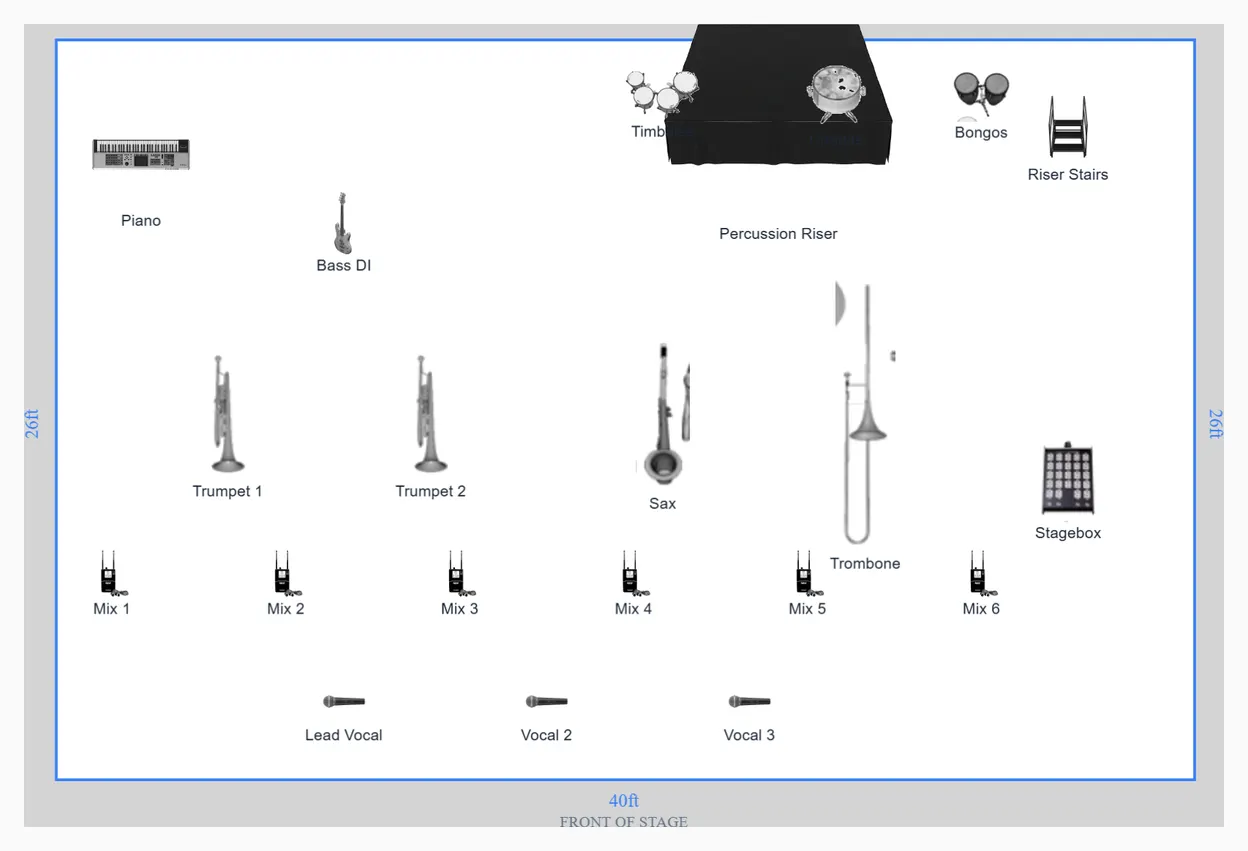
There is no drum kit on this plot, and that is the point
Twelve players on a 40 by 26 foot stage, and not one of them is sitting behind a kick drum. The time on a salsa bandstand comes from three separate positions strung across the upstage stage right quarter: timbales at x24, congas at x30, and bongos and campana at x35. An engineer who reads that as "percussion, a couple of mics" has already lost the gig.
Treat the section the way you would treat a kit. Every one of those positions is a lead instrument that plays through the whole tune, and the parts interlock tightly enough that a level mistake on one of them makes the other two sound wrong. Get the three of them balanced against each other first, before you touch anything else on the console, and everything downstream gets easier.
Counting percussion channels honestly
This is where the input list either works or falls apart. Do the count instrument by instrument rather than writing "percussion x3" and hoping.
- Timbales. Two drums plus at least two mounted bells and usually a jam block. One mic over each drum and a third on the bell cluster is three channels, and the bell is not optional. The cascara and bell patterns cut through the arrangement in a way the drum heads do not.
- Congas. Two drums is one mic between the heads or two close mics. Three drums is three. Call it two to three channels.
- Bongos. One overhead on the pair, plus the bongocero switches to a hand campana for the montuno, which is a loud instrument aimed away from that mic. One to two channels.
That is five to eight channels of percussion before anything else is patched, which is the same range a fully mic'd drum kit occupies. The placement and distance logic in the drum mic guide transfers directly here even though there is no kit involved.
Add stereo piano at x6, one bass line at x13, four horns across the middle row at y14, and three vocals along the downstage edge, and the total lands between 15 and 20. The 32 channel stagebox at the stage right corner has real room in it, which is unusual on a twelve piece plot. Spend that headroom on individual percussion mics rather than on a spare that nobody uses. The input list guide covers how to lay the document out so those five to eight percussion lines read clearly instead of as a wall of text.
Riser height versus who can see the timbalero
The percussion riser sits under the stage right end of that line with a three step unit at x38 for access. Confirm two things with the venue before you build it: the height, and whether the timbales at x24 are up on it or down on the deck at the inboard edge.
That second question sounds like a detail and is not. In most salsa bands the timbalero calls the section changes, the mambo, the moña, the ending. Everyone who takes a cue needs a sightline to that position. Four horn players standing at y14 with their backs to the percussion cannot see anything, so the cue has to be audible, which is another argument for putting the bell on its own channel. A riser 12 to 18 inches tall lifts the percussionists' heads above the horn row and preserves the visual cue. A 24 inch riser starts to isolate them from the piano and bass instead.
Three wireless vocals and a nine foot line
The three handhelds sit at x13, x20 and x27, three feet off the front edge and seven feet apart. That spacing is deliberate: coro singers need to hear each other acoustically to blend, and seven feet is about the limit before they stop trying. Do not spread them wider to fill the stage.
Three transmitters plus whatever the venue is already running means a real RF coordination conversation, not an assumption. Send frequencies in the advance.
What is missing, and what to do about it
No monitor positions are drawn on this template. That is a gap, and it is the first thing to fill before you send this to anyone. A percussion section needs bass and piano, the horn row needs percussion, and the coro needs everything. Decide whether that happens on wedges or in ears, add the positions, and name each mix by role rather than by number.
Bring the whole thing up in the advance email rather than at load in. The working with sound engineers guide covers how to have that conversation without it turning into a list of demands.