Input Lists
Stage Boxes, Subsnakes, and Audio Splits Explained
Understand stage boxes, subsnakes, analog and digital splits, fan-outs, and console connections so your stage plot and input list match the physical patch.
By Stageplot Pro Editorial Team Updated
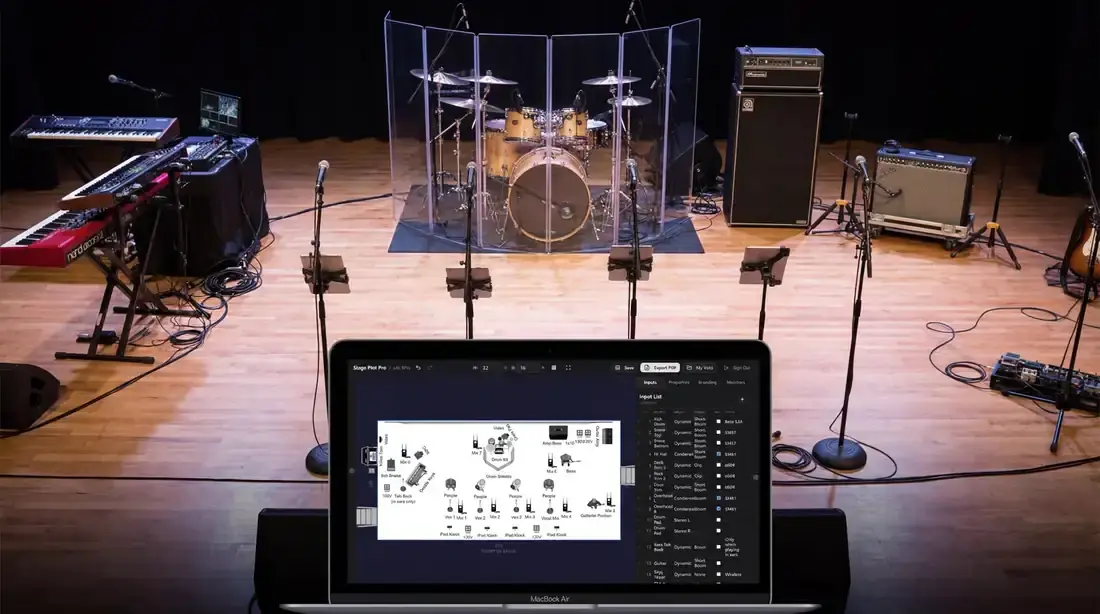
Stage box
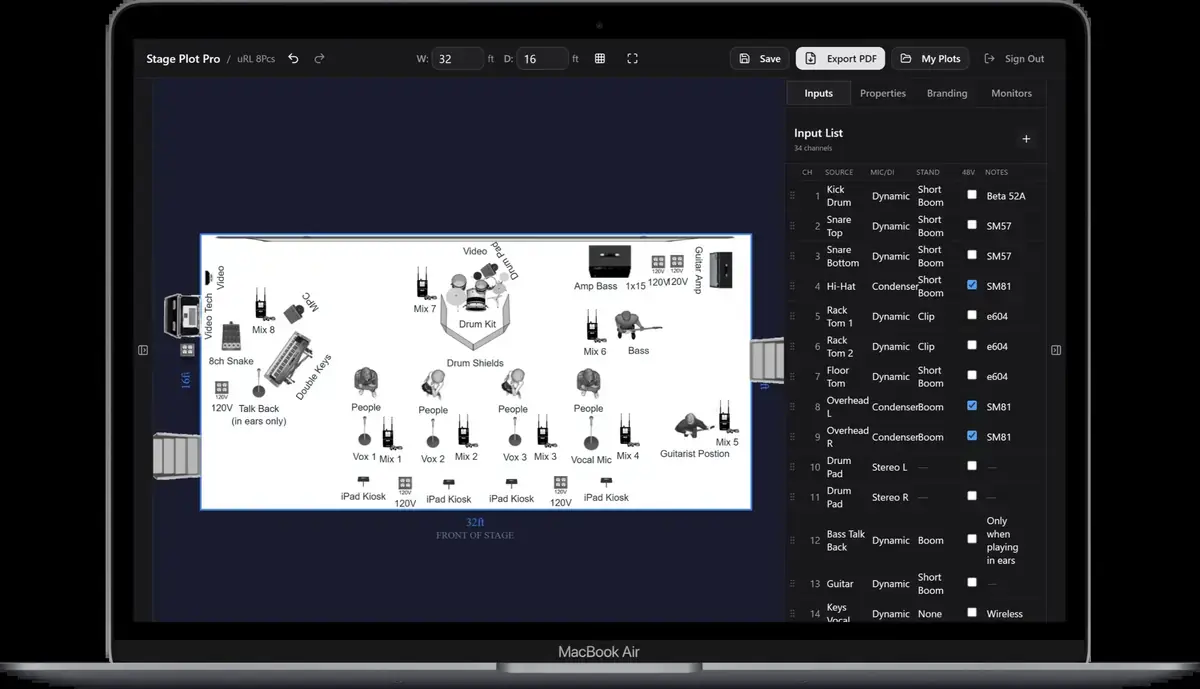
A stage box provides numbered input and output sockets near the performers. In an analog system, those sockets connect through a multicore snake and fan-out to the console or splitter. In a digital system, the box contains remote preamps and converters and transports audio to the console over a supported digital link or network.
Placing I/O close to the sources reduces long individual cable runs and keeps
the patch organized. The input list might call a source Lead vocal; the patch
sheet adds its physical location, such as Stage box A input 17.
Subsnake or drop box
A subsnake is a smaller local fan-in. A drum subsnake can collect kick, snare, toms, overheads, and vocal into one loom that runs to the main stage box. A downstage drop can collect several vocal mics and DIs across the front line.
Subsnakes speed changeovers when their inputs are labelled and tested. They
create confusion when both ends use undocumented numbering. If Drum sub 1
lands on Stage box 17, record that mapping before line check.
| Device | Primary job |
|---|---|
| Stage box | Main local I/O connection between stage sources and console system |
| Subsnake | Collects a nearby group of inputs and carries them to the stage box |
| Fan-out | Separates a multicore into individual connectors at one end |
| Analog split | Feeds the microphone signal to two or more systems before preamps |
| Digital split | Shares audio channels between compatible networked devices or consoles |
Analog split systems
An analog split takes one microphone input and provides outputs for front of house, monitors, recording, or broadcast. Transformer isolation on one or more legs helps separate grounds and systems. A passive parallel split can work in some designs but requires careful grounding, phantom-power, and loading decisions.
Production must establish which console supplies phantom power. Do not enable 48 V from multiple outputs unless the splitter and system are explicitly designed for that operating method.
Digital stage boxes
Digital stage boxes combine remote-controlled preamps, analog-to-digital conversion, and multi-channel transport. Common ecosystems include AES50, Dante, MADI, AVB/Milan, and manufacturer-specific links. Similar Ethernet-style connectors do not make systems compatible.
Confirm:
- Supported protocol and channel capacity
- Sample rate and clock master
- Firmware and device compatibility
- Redundant or primary/secondary network design
- Which console owns head-amp gain
- Whether gain tracking or digital trim is available to a second console
- Switch configuration for networked audio, including QoS and IGMP where required
Split workflow for front of house and monitors
With separate FOH and monitor consoles, both engineers need the same sources but different control. An analog split gives each console independent preamps. A digital split may share the remote head amp, which makes gain ownership critical: large preamp moves by one operator can affect the other desk.
A practical digital workflow assigns one desk as head-amp owner and uses digital trim on the other where supported. Confirm the exact console ecosystem rather than assuming this behaviour is universal.
Outputs return through the stage system too
Stage boxes often provide analog outputs for monitor amplifiers, powered wedges, IEM transmitters, side fills, front fills, or other destinations. Label output patches separately from microphone inputs. A monitor mix sent to the wrong socket can be as disruptive as a missing input.
Keep speaker-level wiring outside line-level stage boxes unless purpose-built hardware and system design say otherwise. Console and network outputs normally feed processors, amplifiers, powered loudspeakers, or transmitters at line level.
Show it in the advance
The stage plot should show major I/O rack and subsnake positions when they affect cable paths or changeovers. The input/patch documentation should list channel and socket mappings. The rider should state protocol, console, split, recording, and monitor requirements.
Frequently asked questions
Is a digital stage box the same as a snake?
It serves the same transport purpose but also contains preamps and converters. Audio travels digitally over a supported link rather than as many separate analog channels.
Can two consoles share one digital stage box?
Only when the protocols, consoles, routing, and control design support it. Confirm head-amp ownership, clocking, firmware, and channel mapping in advance.
Where should subsnakes appear on a stage plot?
Show them when their location affects cable paths, fast changeovers, or supplied infrastructure. Record the exact input mapping in the patch sheet.
Field workflow: turn the advice into a usable advance
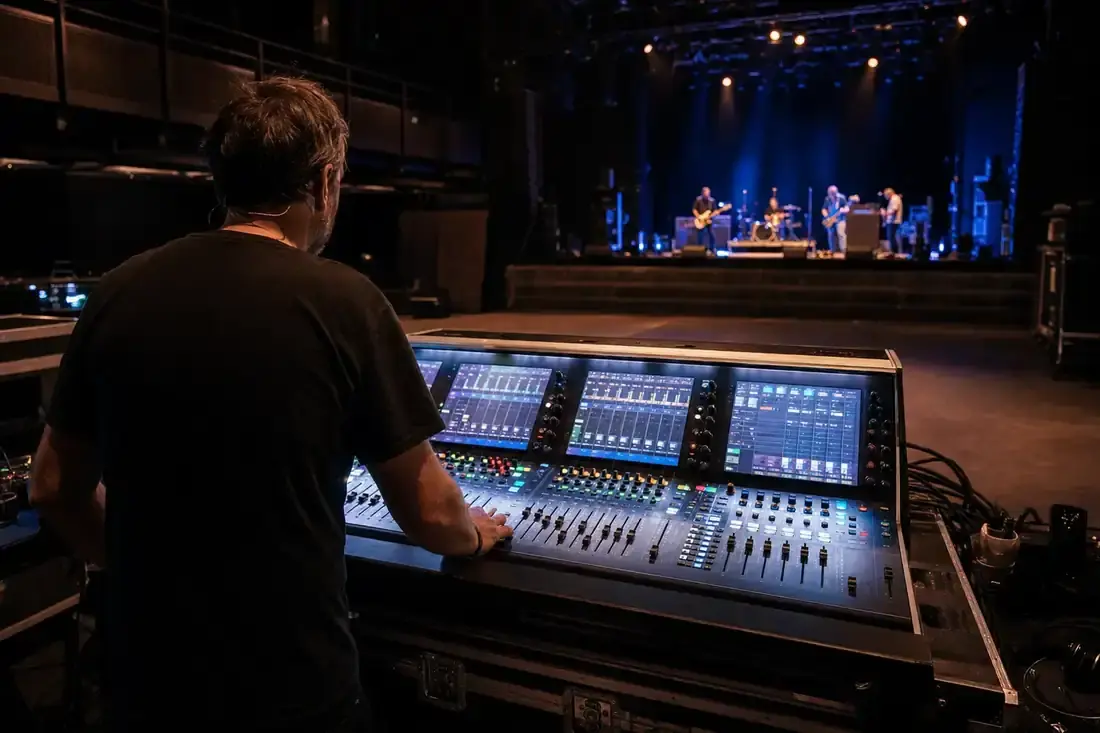
Stage boxes and subsnakes organize distance and location; splits create independent destinations. A drop box near drums reduces long individual cable runs, while an analog or digital split can feed front of house, monitors, recording, or broadcast. The advance should describe required input locations and destinations without assuming the venue uses one specific transport.
Use this workflow
- Group sources by physical stage area.
- Choose drop locations that avoid traffic and minimize loose cable.
- Identify every destination that needs an independent feed.
- Confirm who controls preamp gain in digital split systems.
- Document return paths for wedges, IEMs, fills, and communications.
Working example
A drum subsnake may collect twelve microphones and land at the stage-right main box. An analog transformer split can then feed separate FOH and monitor consoles. In a digital system, one rack may provide preamps while consoles share or compensate gain, making control ownership an essential advance question.
Engineer’s note
A connector count alone does not prove capacity. Confirm analog versus digital transport, input and output direction, sample rate, protocol compatibility, redundancy, clocking, and available return channels. Never assume two networked devices can share audio merely because they use the same cable type.
Adapt it to the venue without losing the source of truth
Keep one master document for the traveling lineup, then make a deliberate venue or format revision when the stage, backline, channel capacity, monitor system, or performer count changes. Put the revision date in the file and on the page. If a venue proposes a substitution, record the accepted change in the advance thread instead of quietly turning it into a permanent requirement.
When resources are limited, reduce the plan in an agreed order. Protect the sources and outputs that carry timing, pitch, safety, and show control first; simplify preferences second. A tested mono playback feed, shared wedge plan, reduced drum-mic package, or alternate backline choice is useful only when the band has approved it before the changeover clock starts.
Run a two-minute production review
Read the finished package from the perspective of a technician meeting the act for the first time. Count the physical connections, identify the artist handoff points, trace private cues to their destinations, and separate facts from requests. Then compare the terminology across the plot, list, rider, cable labels, and email. A source with three different names becomes three separate troubleshooting questions.
After the show, capture only changes that will travel. Update the master for a new performer, instrument, output, monitor system, or permanent rig change. Leave one-night venue substitutions in the date notes. This keeps a useful local workaround from becoming inaccurate information on every future advance.
Final verification
- Drop locations match the plot.
- Destinations are named.
- Gain ownership is agreed.
- Return channels are counted.
Ask someone who did not build the document to review it for two minutes. If they cannot identify the performers, inputs, monitor plan, ownership, and unresolved questions without coaching, revise the labels before sending it. A fast independent read is the closest rehearsal for how production will use the material.