World
Afrobeat 11-Piece Stage Plot Template with Horn Section
Build an Afrobeat stage plot with drums, bass, guitar, keys, layered percussion, four horns, two vocals, IEM mixes and a production-ready stagebox setup.
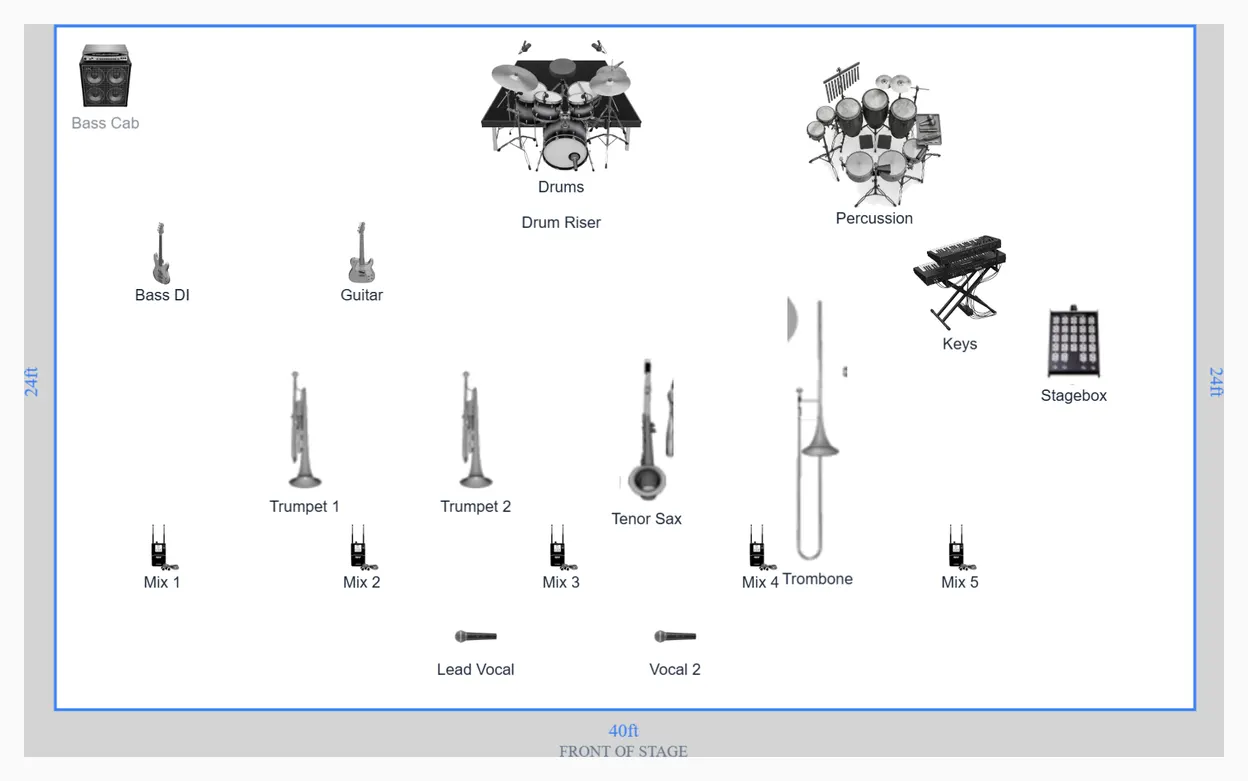
Eleven players into one 32 channel box
This template is a budget exercise before it is anything else. Eleven musicians on a 40 by 24 foot stage, and a single 32 channel stagebox at x38 to carry all of them. That is workable, but only if somebody does the count honestly before load in rather than discovering at line check that the box is full and the second keyboard has nowhere to go.
Here is the real count, high end first, because the high end is what you have to plan for:
- Kit. The mic'd five piece on a riser at x20 is 8 to 11 channels if you take kick in and out, snare top and bottom, hat, three toms and a pair of overheads. Call it 9.
- Percussion. The rig at x31 is 3 to 5. Congas take two, and a shekere, agogo or talking drum takes one each.
- Bass. Two, and see below.
- Guitar. One.
- Keys. The double keyboard at x34 is 2 if both boards are summed to mono, 4 if both run stereo. Ask.
- Horns. Four, one per player across the y14 row.
- Vocals. Two wireless handhelds at the downstage line.
Worst case that is 27 channels of band. Add a talkback, a playback pair and one spare and you are at 31 of 32. There is no room in that box for the surprise that always shows up. If the band travels with a spare guitar amp mic or a second percussionist, you need a second box or a split, and the stage boxes, subsnakes and splits guide covers what that actually involves.
The bass shows up twice on this plot
There is a 4x10 cab at x4 and a separate bass DI position at x6. That is not redundancy on the drawing. It is a decision the band has to make and then write down.
One channel means DI only, the cab is backline for the player's own benefit, and front of house gets a clean signal with no bleed. Two channels means DI plus a mic on the cab, blended at the desk, which is how you get the growl an Afrobeat bass part often wants and is also how you get a phase relationship somebody has to check. Two channels is the better sound and the more expensive choice, and it is one of the four lines you may not have room for once the drum kit is fully patched. Pick one, put it on the input list, and note the phase question next to it.
A horn line that plays riffs, not pads
Four horns at y14, spread from x11 to x29, eighteen feet of front line. In a big band those players hold long chords. Here they mostly do not. Afrobeat horn writing is short, hard, repeated figures answering the vocal, silent for stretches, then back in at full volume.
That changes the console work more than it changes the mic choice. Compress the horn group lightly or not at all, because a heavy compressor rounds off exactly the attack that makes the figure land. Ride the group fader instead. And plan for long stretches where four open mics on stands are contributing nothing but kit and percussion bleed, which is a good argument for a group mute the engineer can reach rather than gates that will chop the front off the first note back in.
Eighteen feet also means the two players on the ends cannot hear each other well. If the section relies on tuning to each other, tighten that spread to twelve feet before you worry about monitors.
Twenty minute arrangements change what soundcheck is for
An Afrobeat tune can run fifteen or twenty minutes and move through four distinct sections with completely different densities. Checking one chorus tells the engineer nothing useful. Check the loudest section and the sparsest section of one tune and skip the rest.
That is the kind of instruction that belongs in writing before the day, not in a conversation at 4pm. Put it in the rider next to the channel list. The tech rider template has a place for performance notes like this, and the input list template gives you a format the engineer can patch straight from.
No monitors are drawn, which is the first gap to close
This template ships without a single wedge or in ear position on it. Fill that in before you send it anywhere. Eleven players is realistically six to eight mixes, and on a stage this size with a riser upstage centre and a horn row across the middle, where those speakers go determines how loud the horn mics can run. Decide it on the plot, not on the deck.