Jazz
17-Piece Big Band Stage Plot Template with Brass Risers
Start with a 17-piece big band stage plot for rhythm section, saxes, trombones, trumpets, conductor, music stands, raised brass rows and a stagebox unit.
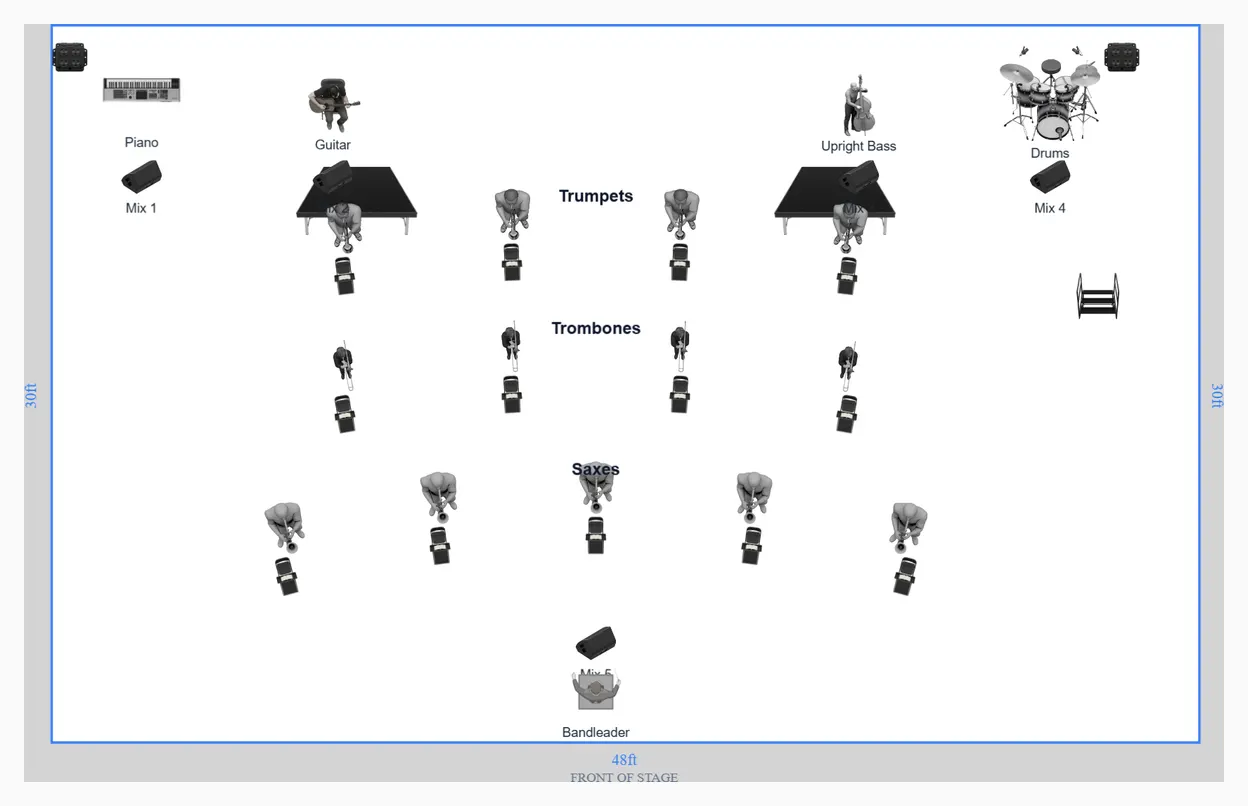
Seventeen players on a 48 by 30 foot stage
A big band plot is a seating chart before it is an audio document. Seventeen people have to see the leader, hear each other acoustically, and get on and off two levels of riser without walking through the rhythm section. Get the geometry right and the audio mostly takes care of itself. Get it wrong and no amount of console work rescues it.
This template lays the band out the way most working big bands actually sit. Rhythm section runs across the upstage edge: stereo keys at stage left, a seated guitarist beside them, an upright bass at stage right, and the five piece kit in the stage right corner next to it. Bass and drums sit adjacent on purpose. A rhythm section that cannot hear each other without help is a rhythm section that will ask for help all night.
The three horn rows step downstage in the traditional order: trumpets at the back on risers, trombones in the middle row, saxes on the deck at the front. The bandleader stands centre at the downstage edge facing the band. That order is not decoration. Trumpets are the loudest and most directional section in the band, so they go highest and furthest back, which lets them play over the rows in front rather than into the back of somebody's head.
Channel count, and where the real decision lives
The template gives you roughly 20 to 24 channels depending on how you mic the horns, which is the one genuinely consequential choice on this plot.
- Drums. 6 to 8 channels for a micd five piece, plus overheads.
- Upright bass. One channel, pickup or mic, and it is worth naming which.
- Guitar. One channel from a small combo or a direct feed.
- Piano or keys. A stereo pair, so two channels.
- Horns, option A. Individual mics: five saxes, four trombones, four trumpets, so 13 channels of horn.
- Horns, option B. Section mics: two or three per row, so 6 to 9 channels total.
- Bandleader talkback or announce mic. One channel, and it needs a mute the leader can reach.
Option B is what most one off ballroom and festival dates actually run, because 13 horn channels on a shared console with a 20 minute changeover is a fantasy. Option A is right for a recorded show or a residency where soloists need individual level. Say which one you want in the advance, because the difference is an entire stagebox worth of lines and the engineer will plan the patch around it days before you arrive.
Monitors: five mixes, and the horns do not get one
The plot places wedges for keys, guitar, bass, drums, and the bandleader. That is deliberate. Horn rows in a big band hear each other acoustically and hear the rhythm section behind them without help, so putting wedges in front of a sax row usually just adds volume to a section that was already balanced. Where horns genuinely need something, it is almost always more rhythm section, not more of themselves, and one wedge shared per row solves it.
The bandleader wedge at the downstage edge is the mix that matters most and the one most often forgotten. A leader who cannot hear the vocal or the soloist cannot cue the band. Ask for that mix early in soundcheck rather than at the end. The general logic for building these sends is in the monitor mix guide.
Load in, risers, and the things that eat your time
Two levels of riser plus stairs is 45 minutes of build with a crew that has done it before, and considerably more with one that has not. Confirm riser height and depth with the venue in advance. An 8 foot deep riser holds a trombone row comfortably. A 4 foot deep riser does not, once the chairs and music stands are on it.
Stands are the other quiet time sink. Seventeen stands need seventeen stand lights, which need power runs that are not on the audio plot but will absolutely delay your doors if nobody planned them. Note stand light power on the plot as a production item. It costs you one line and saves an argument. If you are working a stage you have never seen, the stage dimensions guide covers what to ask for before you commit to a riser layout at all.
Variations worth knowing
- Vocalist out front. Add a wireless handheld and a dedicated wedge downstage centre, and expect the leader to want that vocal in their mix too.
- Piano instead of keys. A real grand changes the whole stage left corner and needs its own mic plan, usually a pair inside the lid.
- Reduced stage. On anything under 36 feet wide, drop the trombone riser before you drop the trumpet riser. Height matters more to the top row.
- Festival slot. On a shared bill, the risers are usually not happening. Plan a flat version of this plot in advance rather than improvising it on the day, and read the festival stage plot guide for how shared backline changes the conversation.