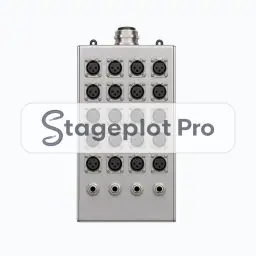
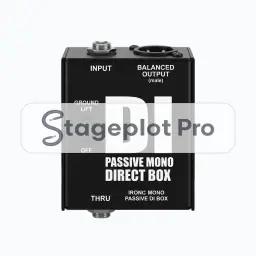
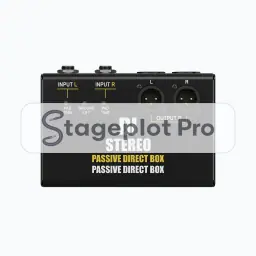
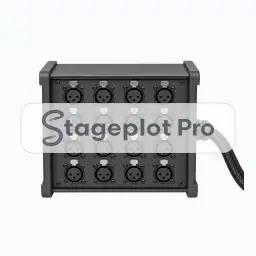
16ch Stage Snake stage plot icon, Stageboxes gear in the Stageplot Pro library
16ch Stage Snake stage plot icon. This public preview carries a watermark; the version inside the editor does not.

Stageboxes

16ch Stage Snake Stage Plot Icon

The 16ch Stage Snake icon documents signal flow, not just scenery. It fixes the point every input cable on stage has to reach, which is the part of a plot the audio department reads first.

Place it, rotate it, and give it a label that matches the language your crew already uses. The export keeps all of it.

Category
Stageboxes (4 icons)
Input list
16 channels
Mic or DI default
DI
Plan
Included with Pro

Using the 16ch Stage Snake icon on a stage plot

Where it goes on stage

Stage position is the thing that gets argued about at load in, so it is worth drawing accurately. Boxes sit upstage left or upstage right against the wall, out of the walking route and close to the heaviest cluster of inputs. If the room forces a compromise, move the icon and export again. A fresh PDF is cheap; an argument at load in is not.

What the crew needs to know

One thing worth writing down. Give the channel count of the box. Stageplot Pro expands a snake icon into its own numbered channel rows on the input list.

On the input list

16ch Stage Snake expands into 16 numbered channel rows on the input list, each defaulting to a DI input, no stand and phantom power off. Drawing the box rather than describing it is what makes the copper count add up.

Console exports

The input list behind the plot exports as a Behringer X32 or Midas M32 scene file, a Behringer Wing scene, or CSV channel names for Allen and Heath dLive, Avantis, and SQ, DiGiCo, and Yamaha CL and QL desks. See the console guides.
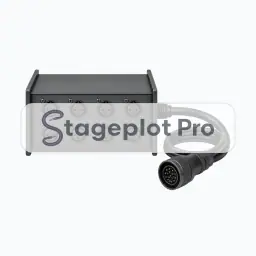
More Stageboxes

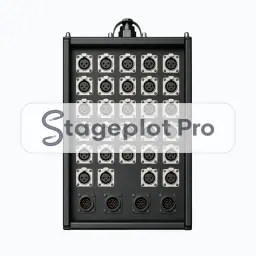
4 icons share the Stageboxes section of the palette. These are the ones most often placed alongside 16ch Stage Snake.

View all Stageboxes icons

Gear that usually shares the plot

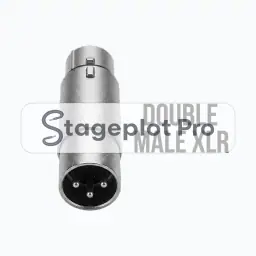
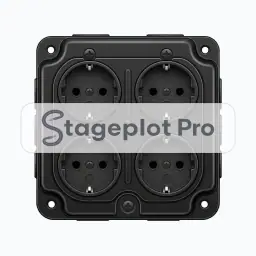
Fixes the point every input cable on stage has to reach is only part of the picture. These icons come from Cables, AC & DI and PA, the sections that most often appear on the same drawing.